Bristol
The most visually loud city outside London, and one of the most rewarding to shoot in Britain: a constantly repainted open-air gallery of street art, a genuine covered market, a working harbourside and hillsides of coloured houses. If you shoot street beyond the capital, Bristol should be near the top of the list.
Bristol Temple Meads is the main station; roughly 1h40 from London Paddington
St Nicholas Market, Corn Street — generally Monday to Saturday, daytime
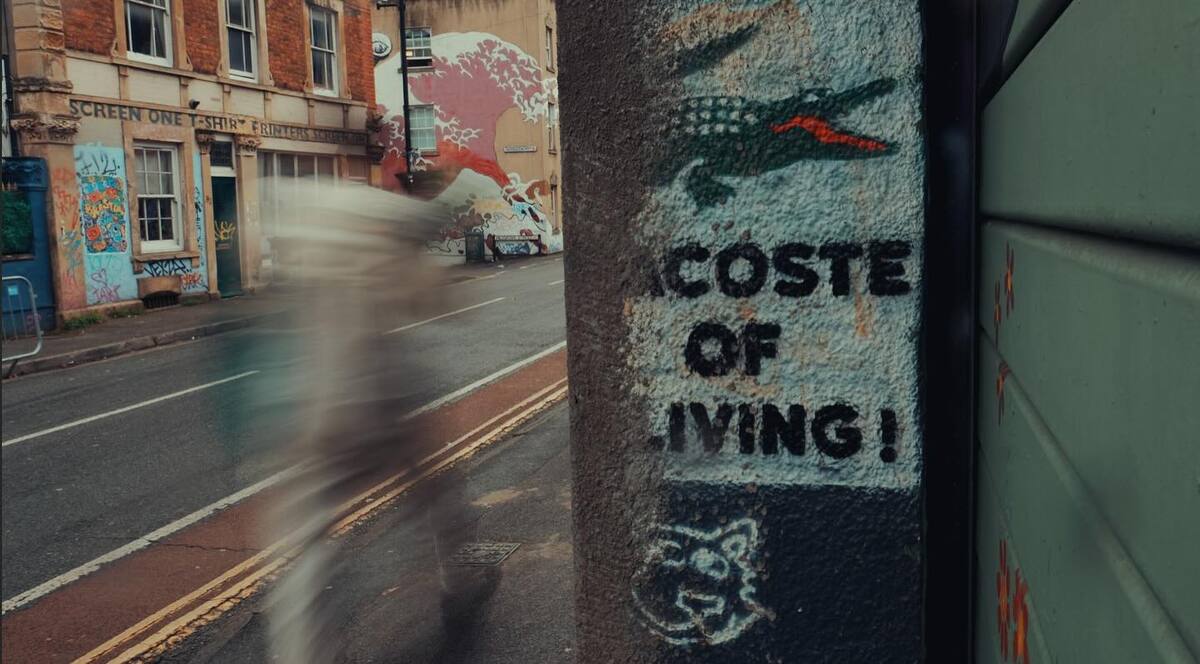
Stokes Croft and the surrounding walls — constantly repainted, never the same twice
Upfest (Europe's largest street art festival) has run in the Bedminster area in summer
Why Bristol punches above its size
Bristol has a density and a visual identity that most British cities of its size simply do not. It is the birthplace of Banksy and the centre of British street art, which means whole neighbourhoods — Stokes Croft above all — are covered in constantly changing murals that give you a ready-made, ever-shifting set to work in front of. It also has an independent, political, slightly scruffy energy that reads in the streets and the people.
The geography helps too. The city climbs steep hills, so you get elevation, long views and walls of coloured terraced houses behind your subjects. And the harbourside gives you water, reflected light and a completely different, more polished register a few minutes from the graffiti.
Where to actually shoot
Stokes Croft is the heart of it: the murals are the backdrop, repainted often enough that the location is never the same twice. The trick is patience — frame the wall and wait for a person to walk into it and complete the picture, rather than shooting the art alone.
St Nicholas Market, in the old centre around Corn Street, is a proper covered market — food stalls, traders, narrow busy aisles and pools of light — and the strongest single spot for classic candid market frames.
The Harbourside gives you the water, the SS Great Britain, quayside crowds and reflected light; a cleaner, brighter counterpoint to Stokes Croft.
Gloucester Road claims to be one of the longest stretches of independent shops in the country — a real working high street with almost no photographic footprint.
Clifton and Totterdown are the elevation and colour: the pastel and brightly painted terraces stacked up the hillsides make a wall of colour behind anyone in front of them.
How to work it
Bristol is a colour city — the murals, the painted houses, the market produce all do compositional work — so shoot it in colour even if you normally work black and white. Around Stokes Croft, treat the walls as sets and fish: pick a strong section, set your exposure and focus, and wait. In St Nicholas Market, work tighter, meter for the lit stalls and let the aisle shadows go dark.
The steep streets are worth using deliberately: shoot up or down a hill to stack the coloured houses behind a subject, or find a high vantage point for the long views. And because Bristol is compact, you can move between the graffiti, the market, the harbour and the hills in a single day and come home with four distinctly different-looking sets.
Field Questions
Is Bristol good for street photography?
Very — it is arguably the most visually rich city outside London, thanks to the constantly changing street art around Stokes Croft, a genuine covered market at St Nicholas, the harbourside, and hillsides of coloured houses in Clifton and Totterdown. Compact enough to shoot several distinct locations in one day.
Where is the best street art in Bristol?
Stokes Croft and the surrounding streets are the centre of it, repainted often enough that the walls are never the same twice. Bedminster, in the south of the city, has hosted the Upfest street art festival. Use the murals as backdrops and wait for people to walk into frame.
When is St Nicholas Market open?
St Nicholas Market on Corn Street generally runs Monday to Saturday during the daytime. It is a covered market of food and independent traders, and one of the best spots in the city for candid market photography. Check current hours before a special trip.
Street Manual cards turn locations like this into specific assignments — what to shoot, where to stand, and the settings to start from.