Oxford Street
Europe's busiest shopping street and a firehose of people — half a million a day. That relentless footfall is the whole opportunity: nowhere else in Britain gives you this volume of human traffic to work with, if you know where to stand and what to wait for.
Oxford Circus, Tottenham Court Road, Bond Street, Marble Arch
Saturday afternoons and the run-up to Christmas
Oxford Circus diagonal crossing — the best single vantage point
Switched on from early November through early January
Turning footfall into photographs
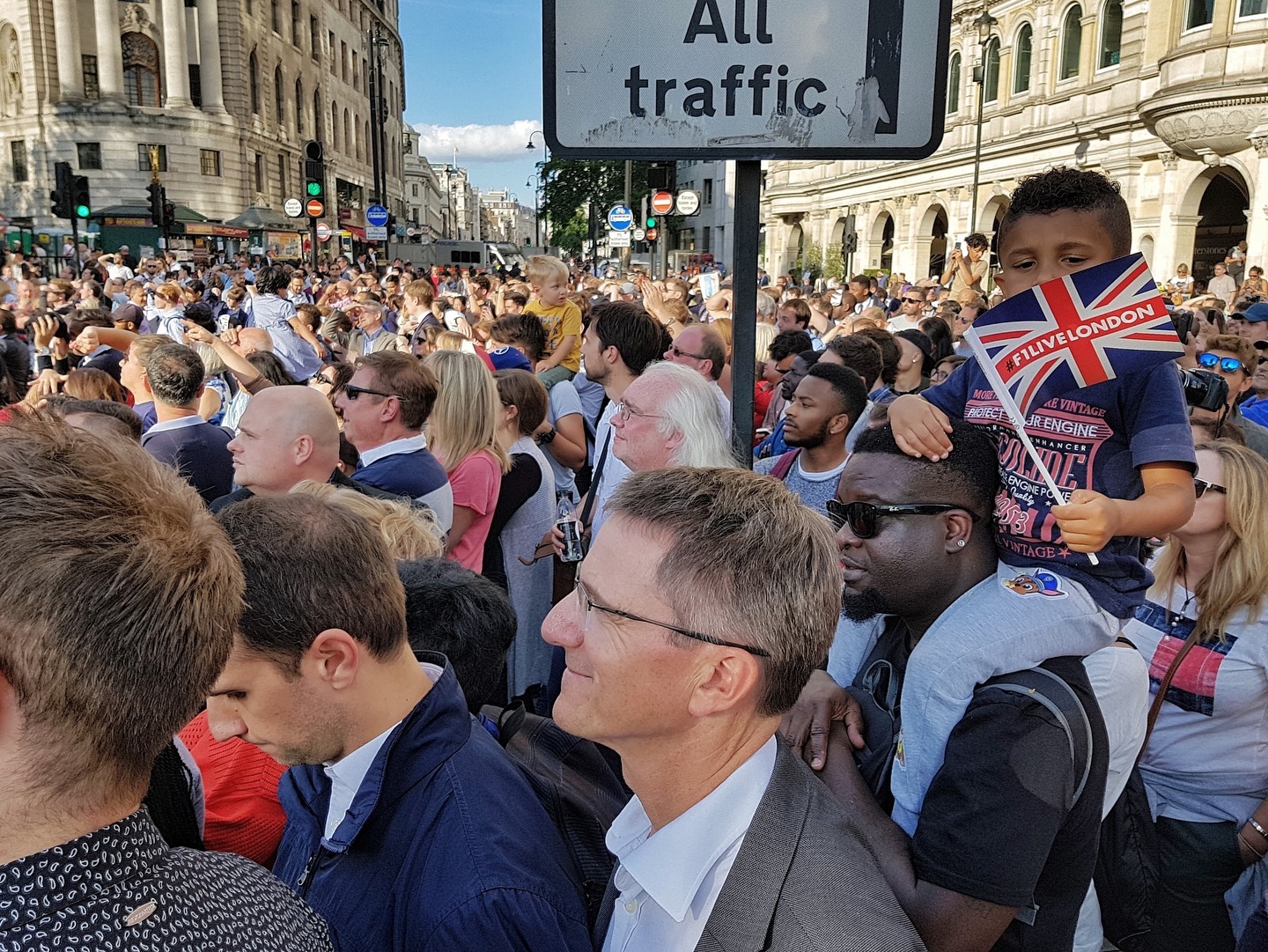
Oxford Street is not a subtle location and it does not pretend to be. It is a mile and a half of chain stores and around half a million people a day, and on its own the shopfronts are visually generic. What it has that almost nowhere else does is sheer human volume — a constant, renewable supply of subjects flowing past any spot you choose to stand in.
The skill here is entirely about position and patience. Pick your background and your light, set your focus, and let the crowd supply the frame. Treat it as a conveyor belt of subjects and it becomes one of the most productive locations in London; wander it aimlessly and it is just shopping.
Where to actually shoot
Oxford Circus is the single best spot. The diagonal (X-shaped) crossing sends people across in every direction on each light change, and from the corners you can shoot the surge of pedestrians against the classic curved facades. It is the most reliable frame on the whole street.
The department store entrances — Selfridges above all — concentrate people, revolving doors, doormen and window displays into tight, workable pockets.
The side streets off the main drag reward escaping the crush: south into Soho, north into Marylebone, or the quieter stretches towards Marble Arch.
Above street level: the crossings and crowds read far better with a little elevation. A first-floor café window or the top deck of a stationary bus turns the mess of a crowd into a legible pattern of heads, bags and umbrellas.
How to work it, and Christmas
Stand at a crossing, prefocus at the distance people pass you, and shoot on the light changes when the crowd moves as one. Backlight in the morning and late afternoon rakes down the street and separates figures from the background — use it. Umbrellas on a wet day turn the crowd into a far stronger graphic than dry pavement ever does, so bad weather is a reason to go, not to stay home.
The Christmas lights, on from early November to early January, transform the street after dark into a canopy of illumination over the crowds — the best window of the year for Oxford Street, combining peak footfall with genuine overhead spectacle. Shoot it at dusk when the lights are lit but the sky still holds some blue, and work the crossings so the crowd sits under the lights.
Field Questions
Is Oxford Street good for street photography?
For sheer volume of subjects, yes — around half a million people a day pass along it. The shopfronts are generic, so the technique is to pick a strong spot (the Oxford Circus crossing above all), set your focus, and let the crowd supply the frame.
Where is the best place to photograph the crowds on Oxford Street?
The Oxford Circus diagonal crossing is the best single vantage point — people cross in every direction on each light change. Department store entrances like Selfridges, and any first-floor window for elevation, are the next best.
When are the Oxford Street Christmas lights on?
They are typically switched on from early November and stay lit through early January. Dusk, when the lights are on but the sky still holds some blue, is the best time to shoot them over the crowds.
Street Manual cards turn locations like this into specific assignments — what to shoot, where to stand, and the settings to start from.