How to Approach Strangers
The technical side of street photography takes weeks to learn. The human side — pointing a camera at a stranger and being at ease about it — is what actually stops people. The good news: it is a learnable skill with learnable scripts, the awkward encounters are far rarer than your imagination insists, and there is a companion piece to this page covering the legal side: UK street photography law.
The two honest modes
Street photography has two legitimate relationships with its subjects, and knowing which one you are in at any moment removes most of the ambiguity that breeds anxiety.
Candid — photographing the scene as it is, unposed, unannounced. This is the core of the tradition and it is not sneaky when done properly: you are photographing public life in public, openly, as an observable person holding a camera. The craft is in being present but unremarkable — part of the street's furniture, not hidden from it.
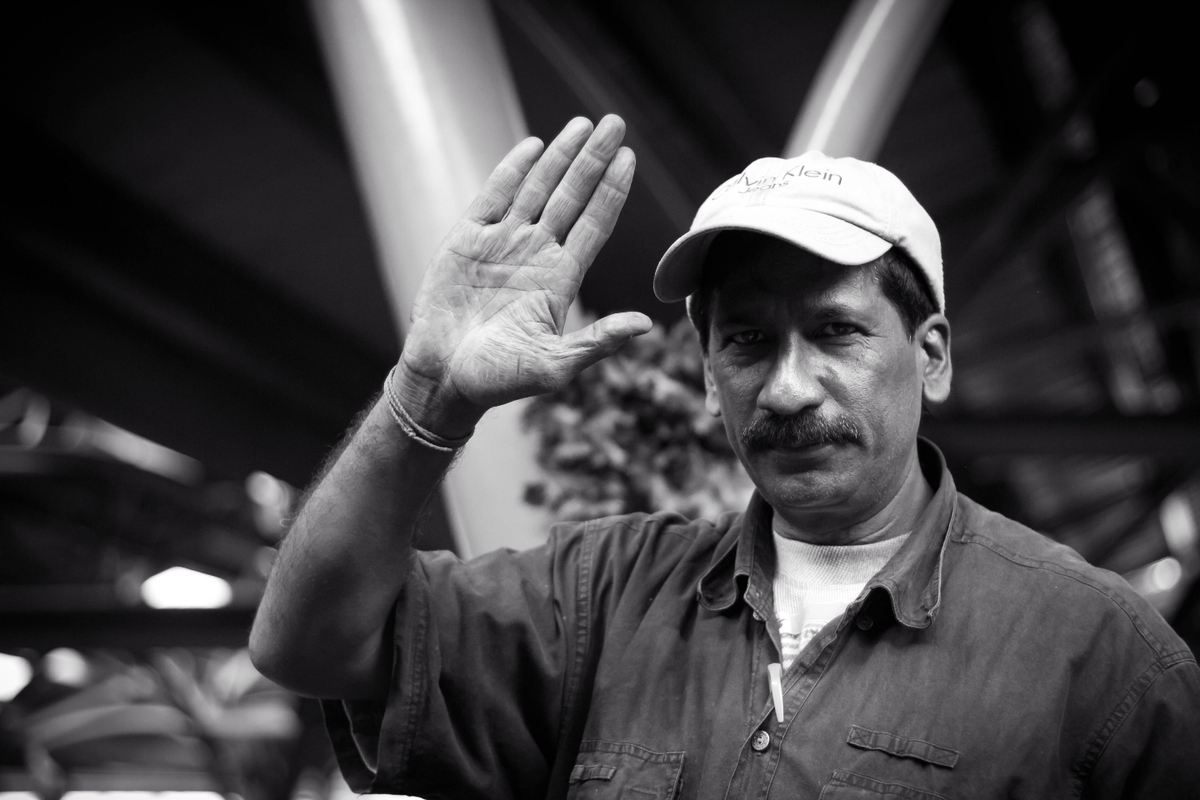
Permission — the street portrait. You see someone remarkable, you ask, they say yes, you have thirty seconds. Different pictures result: composed, eye-contact, formal. Not better or worse than candid — a different genre sharing the same pavement.
The failure mode is the smudge between them: shooting candid while behaving furtively — camera half-hidden, snatching frames, looking away when noticed. Furtiveness is what people react badly to, because it signals you believe you are doing something wrong. Openness reads as photography. Stealth reads as threat.
Body language does most of the work
People decide what you are before you say a word, from posture and manner alone. The photographers who move through streets frictionlessly share the same habits:
Move slowly and stay visible. Rushing and lurking both draw attention; strolling with a camera openly carried is instantly legible as 'photographer', a category the public already understands and mostly ignores.
Shoot, then stay. The amateur tell is shooting and immediately walking briskly away — it retroactively converts the frame into something stolen. Take the picture, stay in position, keep looking at the wider scene. Nothing communicates legitimacy like not fleeing.
Smile when noticed. Eye contact after a frame is the moment that decides the encounter. A relaxed nod or smile resolves it in your favour almost every time; startled guilt invites the challenge.
Let the camera live at chest height. A camera permanently up at the eye is a wall; one resting on a strap, raised briefly and lowered again, is just an object you carry. The zone focus and Sunny 16 cards exist partly for this reason — a pre-set camera spends less time at your face.
Scripts that work
Have the words ready before you need them and the fear of needing them mostly evaporates.
Asking for a portrait: "Excuse me — I love the [hat / coat / light where you're standing]. I'm a street photographer; could I take a quick picture? Ten seconds." Specific compliment, plain identity, tiny cost. Most people say yes, and the noes are cheerful.
When someone notices a candid: a smile and "Sorry — the light was great just there. I'm a street photographer." Offer to show the frame. Most encounters end with curiosity, not conflict.
When someone objects: "No problem — I'll leave you out of anything I shoot from here." Then do so. You are rarely obliged to delete anything (the law page covers exactly what you must and need not do), but the choice to delete a frame for someone genuinely distressed is yours to make, and sometimes it is the right one.
When someone escalates: lower the camera, keep your voice flat and slow, agree where you truthfully can ("fair enough, you didn't ask to be photographed"), and leave. State once, calmly, that street photography in public is lawful — then stop arguing the point. You will not win a legal debate on a pavement with an angry person, and no frame is worth a physical situation. Walking away is professionalism, not defeat.
The ethics underneath the confidence
Confidence without ethics curdles into entitlement, and entitled photographers make the streets harder for everyone. The internal rules that keep the work honest:
Photograph people as you would be photographed — with interest, not contempt. The frame that exists to mock a stranger is a bad picture whatever its composition.
Vulnerability is not a subject. Rough sleepers, people in crisis, people clearly unwell: the default is no. If you believe a picture genuinely says something, it should survive the question 'would I show them this print?'
Children warrant extra distance. Lawful is not the bar; a parent's reasonable comfort is. Wide scenes including children are the tradition; a lens following someone's child is not.
The refusal is data, not injury. Some people will not want to be photographed today. That is not a verdict on you or the craft — it is one stranger's afternoon. Nod, move on; the street is long and full of other frames.
Shoot from warmth and it shows in the work — the great street photographs are nearly all acts of attention, not acts of taking.
Field Questions
How do I stop being scared of photographing strangers?
Reduce the unknowns: pre-set your camera so operating it is automatic, have your one-line scripts ready, and collect experience deliberately — a session where you ask five people for portraits teaches your nervous system that the interaction is safe faster than a year of avoidance.
Should I ask permission before taking street photos?
For candid street photography, no — unposed public life is the genre, and asking first destroys the moment. For street portraits, yes, and a specific compliment plus "ten seconds" gets mostly yeses. Both modes are legitimate; furtiveness in either is what causes problems.
What do I do if someone gets angry about being photographed?
Lower the camera, stay calm and slow, acknowledge them, and leave if the temperature keeps rising. You are generally within your rights in a public place and rarely obliged to delete anything, but de-escalation beats debate — no frame is worth a confrontation.
Do I have to delete a photo if someone asks?
In a UK public place, generally no — no member of the public can require it. But you can choose to, and for someone genuinely distressed rather than merely surprised, deleting is sometimes the humane call. Make it a decision, not a reaction. The UK law resource covers this in full.