Shooting in British Weather
Most photography advice is written for places with weather worth envying, which leaves British photographers waiting for conditions that arrive twelve days a year. The truth runs the other way: the worse the forecast, the better the pictures. Grey light, rain and early darkness are not what you shoot despite. They are what you shoot.
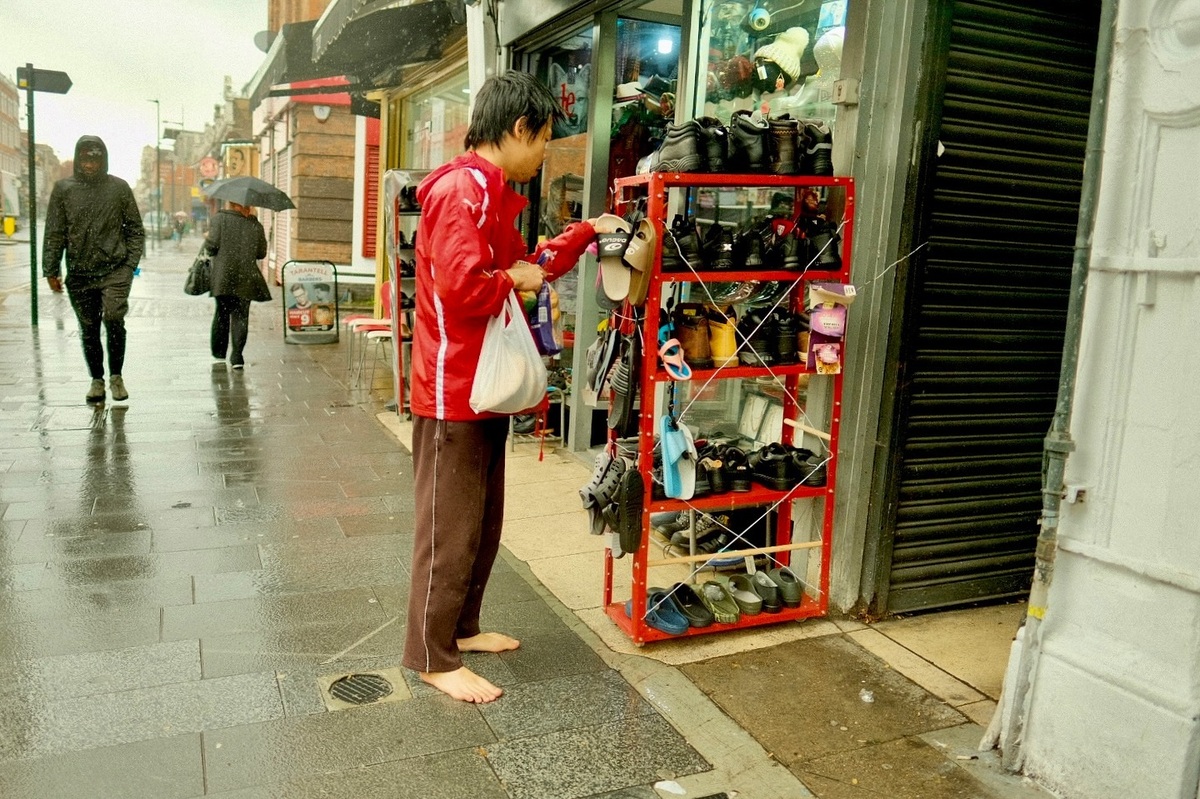
Grey light is a gift wearing a disguise
A full overcast sky is a softbox the size of the county. No blown highlights, no black shadow holes, no squinting subjects — every direction is workable and every hour of the day is usable, which is simply not true of sunshine.
What grey light punishes is lazy exposure and lazy composition. Two adjustments fix both:
Expose down, not up. Cameras see a bright grey sky and underexpose your subject, or you correct upwards and the sky burns to blank white. Do the opposite of instinct: keep exposure modest (a half to a full stop under the meter), let the sky hold tone, and lift shadows in the edit if needed. A pale grey sky with texture beats a white void in every frame.
Colour becomes the subject. Grey desaturates the world just enough that any strong colour detonates — a red bus, a yellow raincoat, an orange shopfront. This is the palette of most classic British colour photography for a reason: the greyness is not the absence of the picture, it is the backdrop that makes colour possible. Composing around one colour hit against grey (see the One Colour for a Month card) is the most reliable frame this country offers.
Rain: everyone else goes home
Rain empties the streets of photographers and fills them with photographs. Umbrellas turn every pedestrian into a graphic shape. Wet pavement doubles every light source. People run, huddle, share shelter with strangers, hold newspapers over their heads — behaviour appears that exists in no other conditions.
Where to stand: shelter is a shooting position, not a retreat. Shop awnings, bus stops, station entrances and covered arcades let you work dry while the weather performs in front of you. Doorway light under dark skies is naturally directional and flattering.
What to shoot: reflections (puddles flip the world; get low and the street becomes symmetrical), the moment rain starts (the scatter is thirty seconds of pure theatre), condensation on café and bus windows (people behind wet glass is a whole genre), and umbrella traffic from slightly above if you can find steps or a bridge.
Gear sense, briefly: modern cameras survive drizzle comfortably — a hand towel in the bag and a lens hood handle most of it. Keep the lens pointed slightly down between frames, wipe the front element often (one drop on the lens ruins every frame after it), and a £2 shower cap or freezer bag makes a downpour workable. Weather-sealing is a comfort, not a requirement.
Winter: darkness at teatime is a feature
British winter gives street photographers something summer cannot: night photography at 4:30pm, when the streets are still full. Commuters under sodium and LED light, shop windows glowing like stage sets, bus interiors lit like film stills — the entire after-dark genre becomes available during ordinary waking hours, with crowds. In June you would have to wait until eleven for streets already empty.
The low sun is winter's other gift. Even on clear days it never climbs, so the raking side-light photographers chase at golden hour in summer runs from mid-morning to mid-afternoon. Long shadows all day, and it pairs perfectly with the shutter drag and flash techniques from the deck.
Exposure-wise, embrace the darkness rather than correcting it: meter for the lit areas — windows, faces under lamps — and let the rest fall to black. Frost and fog are bonus conditions: fog isolates subjects by distance like a depth slider, and breath-steam gives every portrait atmosphere. Dress warmer than you think (photographers stand still more than they walk), keep a spare battery in an inside pocket since cold drains them fast, and the season is yours.
The deeper point
Waiting for good weather is how photography does not happen. If your practice only functions in sunshine, you have roughly one usable month a year and a hobby that mostly consists of checking forecasts. The photographers whose work you admire from this country did not wait — the British documentary tradition is grey-skied, rain-flecked and shot at teatime in December, and that is precisely its atmosphere.
So invert the forecast. Sun: fine, hard shadows, Sunny 16. Grey: soft light, colour hunting. Rain: umbrellas, reflections, shelter theatre. Dark by four: the night shift starts early. There is no bad weather for street photography in Britain. There is only weather, and a photographer either using it or not.
Field Questions
How do I expose for grey, overcast skies?
Slightly under the meter, not over — keep a half to a full stop of exposure in hand so the sky holds texture instead of burning to white, and lift shadows in the edit if needed. Overcast light itself is soft and workable in every direction.
Can I use my camera in the rain?
In drizzle, almost any modern camera is fine with basic care: lens hood, pointing down between frames, a towel in the bag. In heavy rain, shoot from shelter — awnings, bus stops, arcades — or cover the camera with a shower cap or freezer bag. Wipe the front element often.
Is winter good for street photography?
Winter is arguably the best British season: night photography from 4:30pm while streets are still busy, low raking sunlight all day when it is clear, and fog and frost as bonus conditions. Cold drains batteries, so carry a spare somewhere warm.
What should I photograph on a grey day?
Colour against grey — a red bus, a yellow jacket, a lit shopfront. Overcast desaturates everything just enough that single strong colours dominate a frame, which is the signature look of classic British colour street photography.