London Chinatown
A few dense, lantern-strung streets in the heart of the West End that photograph like nowhere else in London: paifang gates, red lanterns overhead, restaurant fronts, and a constant crowd. Compact, atmospheric, and right beside Soho and Leicester Square.
Leicester Square, Piccadilly Circus, Tottenham Court Road
Gerrard Street — pedestrianised, gated, hung with lanterns
Evenings and weekends as the restaurants fill
Chinese New Year (late Jan / Feb) — one of the largest celebrations outside Asia
A small location with a lot in it
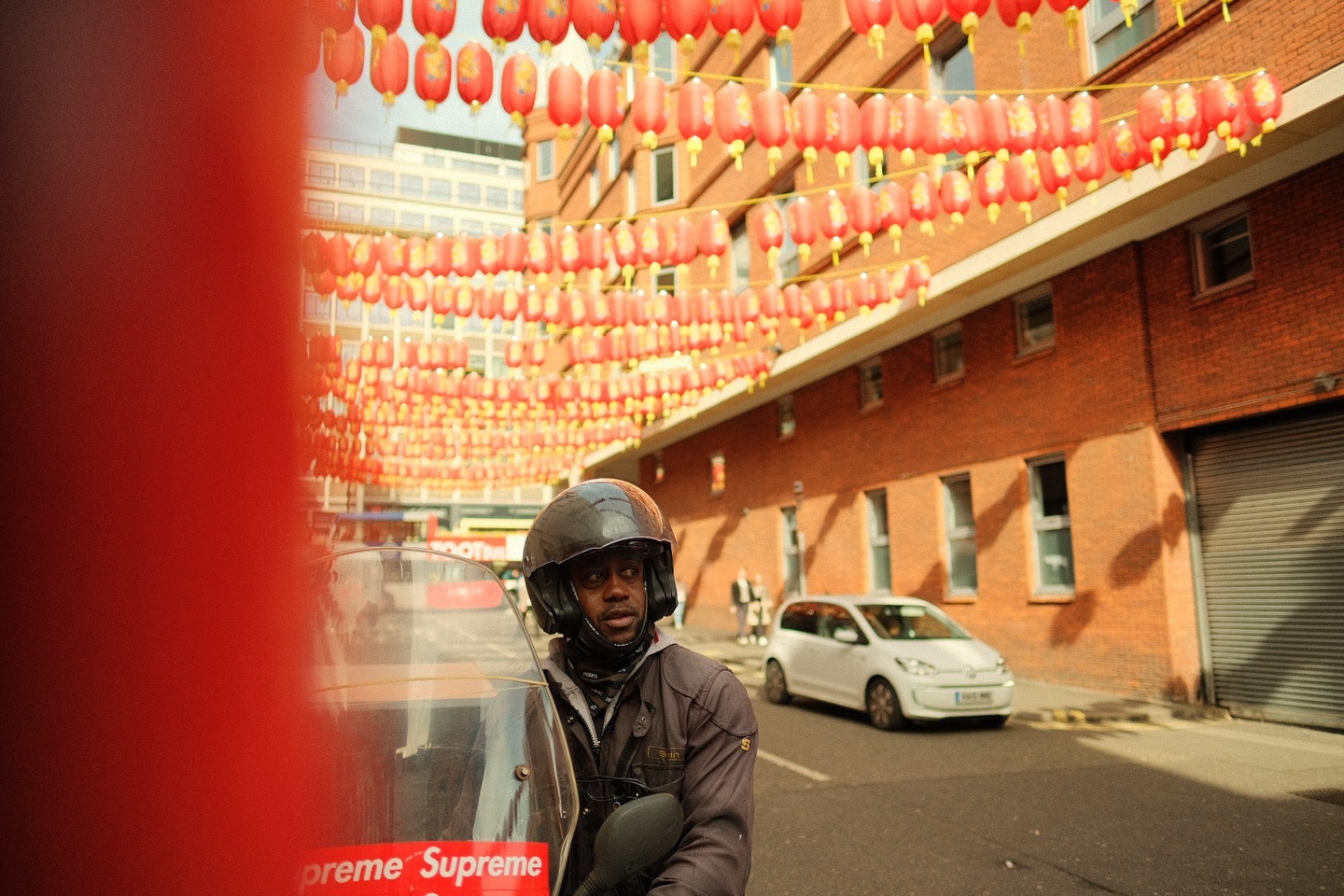
London's Chinatown is compact — really just Gerrard Street and the lanes around it, Lisle Street, Macclesfield Street, Newport Court and Newport Place — but it is one of the most concentrated photographic locations in the city. The community settled here from the 1950s, and the streets have been progressively decorated with the paifang gates, the pagoda-topped phone box, the bilingual signage and the permanent canopy of red lanterns that make every frame instantly legible.
That density of visual signal is the point. You do not have to construct a sense of place — it is overhead in every shot. The work is to get people into those frames so they are photographs of life, not just decoration.
Where to actually shoot
Gerrard Street is the spine: pedestrianised, gated at both ends, lanterns the length of it. Shoot along the street so the lanterns recede into the distance and use the gates as frames-within-frames for anyone passing through them.
The restaurant fronts — roast ducks in windows, staff on the doorways, steam and neon — give you the working life of the place. Early evening, when the lights come on but the light in the sky has not fully gone, is the strongest window for this.
Lisle Street, one block south, is grittier and less decorated, which makes it good for quieter, more documentary frames away from the tourist flow.
Newport Court and Newport Place connect Chinatown towards Charing Cross Road and give you the transitions — the moment the lanterns give way to the ordinary West End.
How to work it and Chinese New Year
It is a small area, so work it slowly and repeatedly rather than passing through once. Position under or beside the lanterns and gates and wait for the street to fill the frame. Early evening gives you the magic-hour balance of warm restaurant light against a blue sky; after dark it becomes pure lantern-and-neon colour and you will be working at higher ISO.
Chinese New Year, in late January or February, is the day to plan for: London's celebration is one of the largest outside Asia, with lion dances, huge crowds and a parade through the West End. It is chaotic, packed, and worth every frame — arrive early, expect to be shooting shoulder-to-shoulder, and work the faces in the crowd as much as the performers.
Field Questions
Where is Chinatown in London?
Between Soho and Leicester Square in the West End, centred on Gerrard Street. The nearest stations are Leicester Square and Piccadilly Circus, and it sits directly beside Soho, so the two combine into one walk.
When is the best time to photograph Chinatown?
Early evening for the balance of warm restaurant light against a still-blue sky, and after dark for pure lantern and neon colour. Chinese New Year in late January or February is the single biggest photographic day of the year there.
When is Chinese New Year in London?
It falls in late January or February depending on the lunar calendar. London's celebration, centred on Chinatown and the West End, is one of the largest outside Asia, with lion dances, a parade and very large crowds.
Street Manual cards turn locations like this into specific assignments — what to shoot, where to stand, and the settings to start from.