Soho
A square mile of density unlike anywhere else in Britain: markets, media, nightlife and the constant churn of people, all packed into narrow streets that keep the light and the crowds where you want them. If you have one afternoon in central London, spend it here.
Tottenham Court Road, Oxford Circus, Leicester Square, Piccadilly Circus
Berwick Street market and the lunch rush, roughly noon–2pm
Old Compton Street and Wardour Street — neon, crowds and spill from the bars after dark
Sunday mornings, before the brunch trade builds
Why Soho works
Soho concentrates more life per square metre than anywhere else in the country. It has been London's entertainment quarter for two centuries — Huguenot refugees, then the music industry, the film trade of Wardour Street, the sex shops and members' clubs, and the longstanding heart of gay London around Old Compton Street. All of it still overlaps in the same few streets, which is exactly what makes it photographable: you are never waiting long for something to happen.
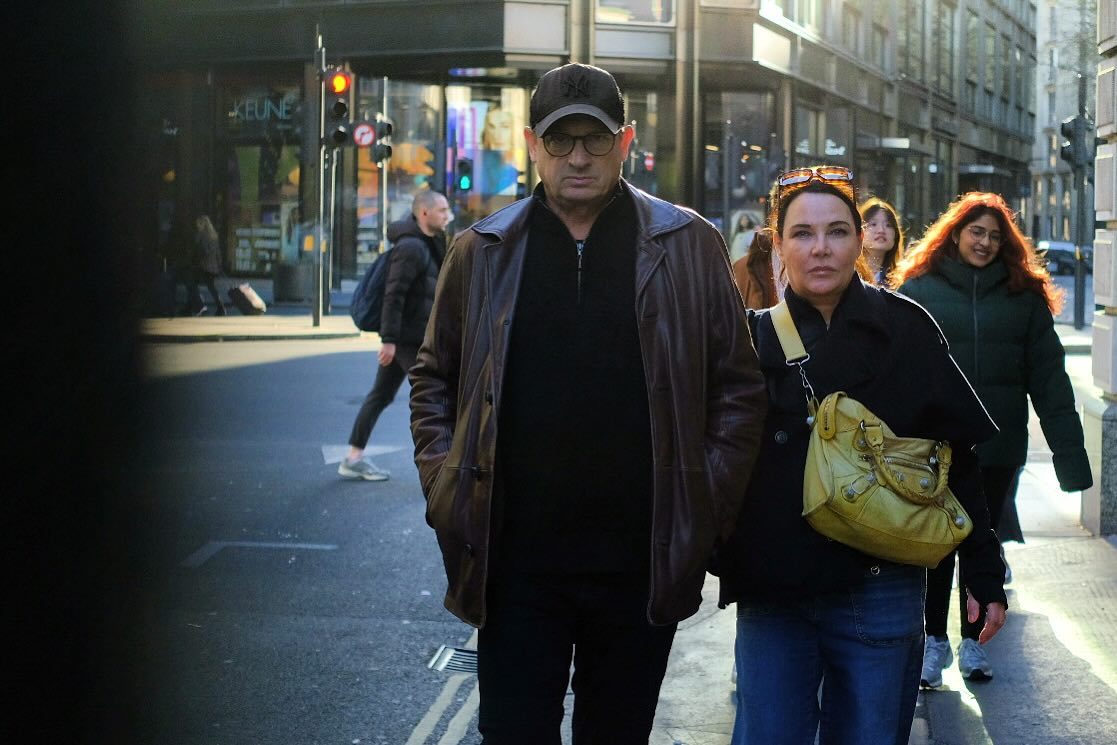
The narrow streets are a technical gift too. They channel people into predictable flows, keep backgrounds close and legible, and throw hard directional light down the canyons in the morning and evening. You do not have to chase subjects here — you pick a spot and the city delivers them.
Where to actually shoot
Berwick Street is the anchor. One of the oldest market streets in the West End, it still has fruit and veg stalls running down the middle, with record shops, tailors and cafés either side. The stalls give you foreground, the traders give you characters, and the lunchtime crowd gives you flow.
Old Compton Street is the social spine — busiest in the evening, densest with people spilling out of bars, and the best place in Soho to shoot the crowd itself.
Wardour Street and Brewer Street give you the neon and the after-dark theatre; the signage here is some of the best in London for night colour work.
Chinatown sits directly to the south around Gerrard Street (covered in its own guide) — the two combine into a single walk.
Carnaby Street, on the western edge, is more commercial and touristy, but the side alleys off it, Kingly Court and Ganton Street, reward a look.
How to work it
Soho is a fishing location, not a hunting one. Find a spot with good light or a strong background — a market stall, a neon sign, a doorway — and let the crowd move through it. Zone focus at 2 metres, f/8 in daylight, and open up for the night streets where you will be working at higher ISO under mixed neon and sodium.
The density means nobody clocks a photographer; you are one camera among thousands of phones. That anonymity is your cover, so you can work close. Mornings are clean and quiet with low light down the streets; lunchtime is peak flow; and after dark is a different location entirely, all glow and motion. Come back at three different times and you effectively get three shoots out of the same square mile.
Field Questions
Is Soho good for street photography?
It is arguably the best square mile in Britain for it — extreme density of people, narrow streets that concentrate crowds and light, market stalls on Berwick Street, and a completely different character by day and by night. Nobody notices a camera among the crowds.
When is the best time to photograph Soho?
Three windows each give you a different location: early morning for clean low light and empty streets, lunchtime (around noon to 2pm) for peak crowd flow and the Berwick Street market, and after dark for neon and nightlife around Old Compton Street and Wardour Street.
Can you take photos on Berwick Street market?
Yes — it is a public street and market, and photography is legal there. As with any market, a little courtesy with the traders goes a long way if you are working a stall for more than a frame or two.
Street Manual cards turn locations like this into specific assignments — what to shoot, where to stand, and the settings to start from.