The Best Cameras for Street Photography
The honest answer to "what camera should I buy for street photography" is the one you will actually carry, that gets out of your way. Discretion, speed, and a set of controls you can work without looking matter far more than sensor size or headline megapixels. This is what I would buy today at each budget: the camera I use, the one I would point most people to for the money, the cheap wildcard, and the ones I would think twice about. Prices are UK and correct at the time of writing, and wherever I can I buy used (more on that at the end). If you are still deciding what to shoot with any of them, the settings guide and where to start will get you moving.
Free 7-day course
Learn street photography, free
One short lesson a day for a week to get you out shooting, plus a pocket cheat sheet.
What actually matters in a street camera
Before the model names, the things that genuinely change how you shoot on the street:
Size and discretion. A camera you can carry all day, and that does not announce itself, is a camera you will use. This is why small APS-C and Micro Four Thirds bodies punch above compact full-frame for street.
Speed off the mark. How fast it wakes, focuses and fires. A slow startup means missed frames, and it is the single thing that has put me off cameras other people rave about.
Controls you can feel. Physical dials for shutter, aperture and exposure let you set the camera by touch and keep your eye on the street. It is why the retro-styled bodies here keep winning.
Good straight-out-of-camera colour. Fujifilm's film simulations, and Nikon and OM System's equivalents, mean you can shoot JPEG, skip editing, and still love the files. For a habit-forming daily camera that matters more than raw dynamic range.
A quiet or silent shutter, and quick, reliable autofocus (or good manual focus for zone focusing). Everything else is a bonus.
The all-rounder I use: Fujifilm X-E5
This is my current camera, and the one I would hand most people who are serious about street. The X-E5 pairs the 40.2MP APS-C X-Trans 5 HR sensor (the same one in the X100VI and X-T5) with five-axis in-body stabilisation worth up to seven stops, 6.2K video, and a new dedicated film simulation dial on the top plate. It is a proper rangefinder-style body, small and flat, and it takes any XF lens.
Body only is around £1,299, or roughly £1,549 with the pancake 23mm f/2.8. Put that little 23mm on it and you have essentially an X100VI you can also grow: same sensor, same stabilisation, but you can swap to a 35mm or a longer lens when you want to.
It is not perfect. It is not cheap for APS-C, and the small body means a bigger lens throws off the balance. But for image quality, discretion and controls in one package, nothing else here beats it for me. I will publish a full X-E5 review soon.
The value pick: Fujifilm X-M5
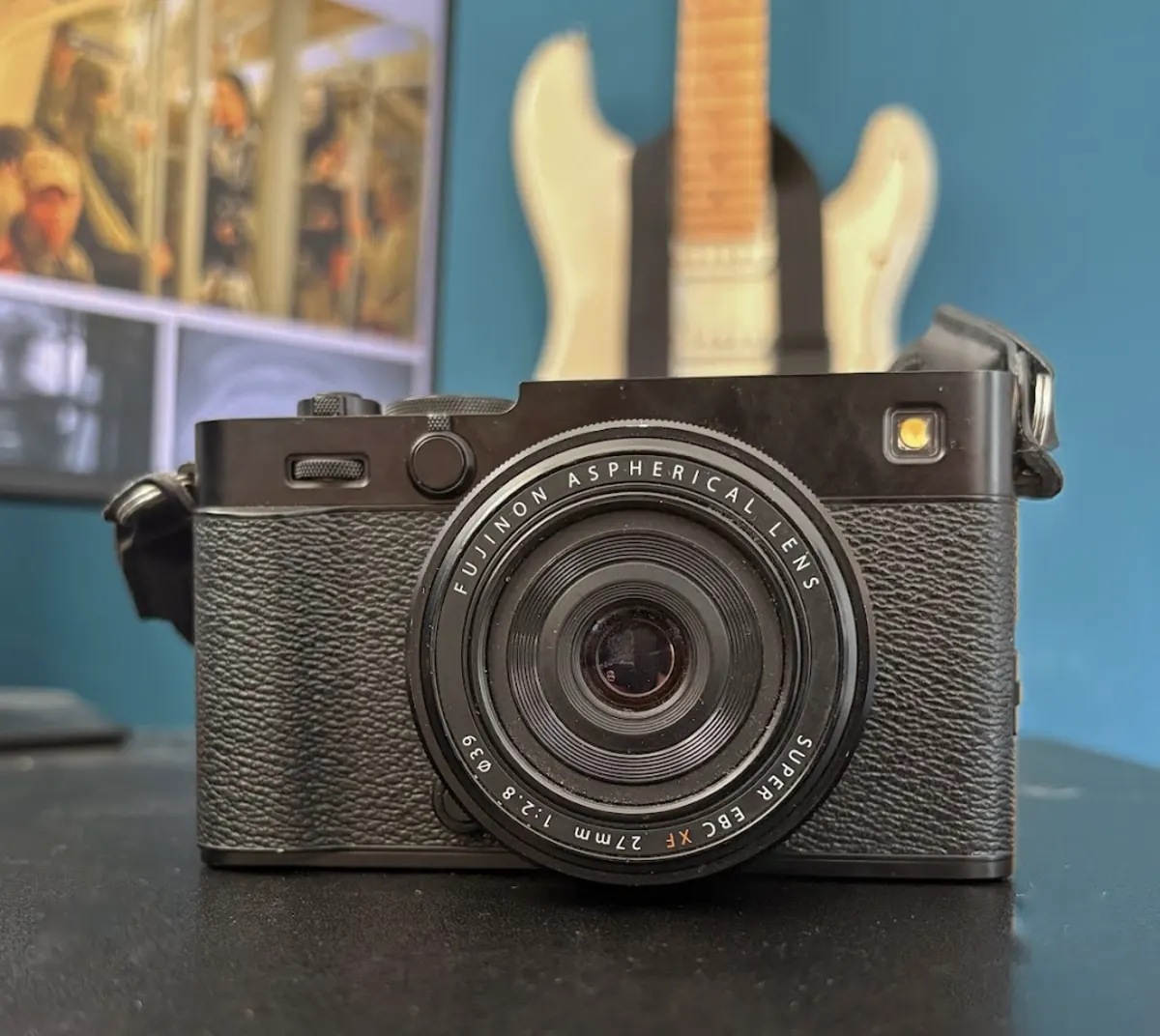
If the X-E5 is out of budget, this is the one to buy, and for a lot of people it is all the camera they will ever need. The X-M5 uses the proven 26.1MP X-Trans 4 sensor, weighs just 355g (the lightest camera Fujifilm makes), records 6.2K video, and still has the film simulations and, importantly, a film simulation dial. It is around £799 with the 15-45mm kit lens.
The compromises are clear and honest: there is no viewfinder and no in-body stabilisation, so you compose on the rear screen and mind your shutter speed. For daylight street photography, held at chest height, neither is a dealbreaker, and the size means it genuinely lives in a jacket pocket. As a first serious street camera, or a tiny second body, it is the best value in this list.
The icon: Fujifilm X100VI
The camera that went viral, and deservedly loved: 40.2MP, in-body stabilisation, a beautiful fixed 23mm f/2 lens (35mm equivalent) and a clever hybrid optical/electronic viewfinder, all in a gorgeous body. Around £1,599, when you can find one. More than two years after launch it is still in short supply in the UK and often only available to pre-order.
Here is my honest take: it is superb, but the X-E5 offers enough to counter it. Same sensor, same stabilisation, similar size, and with the 23mm f/2.8 fitted you get most of the X100VI experience, plus the ability to change lenses and, usually, actually buy one today. The X100VI is the more romantic object and the fixed lens is a genuine creative discipline. If that is what pulls you, buy it. Just know you are paying a premium for scarcity and a lens you cannot remove.
The cheap wildcard: Fujifilm X-T2
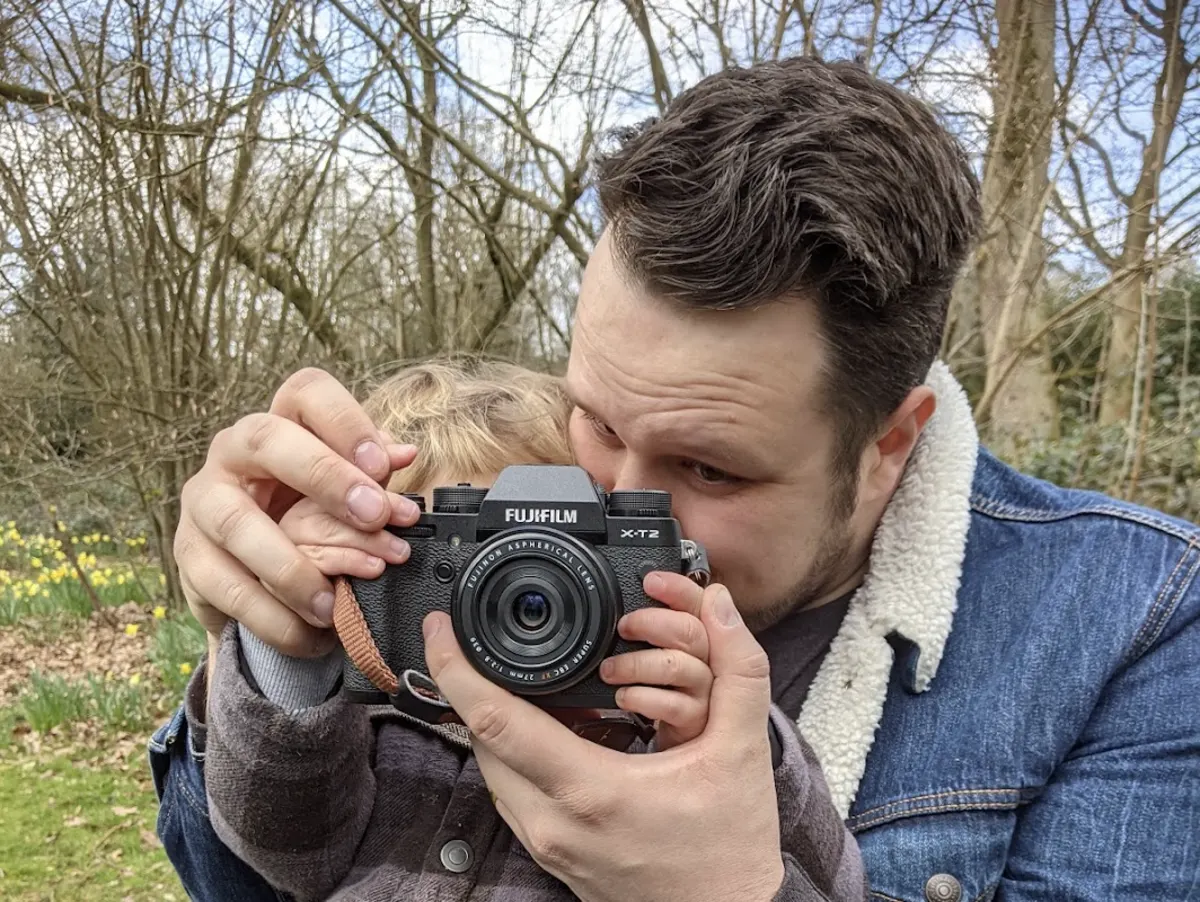
My old camera, and still a brilliant one. The X-T2 dates from 2016 but the 24.3MP X-Trans III files hold up beautifully, the dials are a joy, and the classic Fujifilm colours are all there. Used, it goes for roughly £400 to £550 in the UK depending on condition.
For someone starting out, or anyone who wants to spend the money on lenses and travel rather than the body, this is the smart move. You lose the newest autofocus, the highest resolution and in-body stabilisation, but you gain a real, capable camera for the price of a night out relative to the others here. Buy it used with confidence.
Beyond Fujifilm: Nikon Zf and OM System OM-3
Fujifilm dominates street for good reason, but two rivals deserve a look.
Nikon Zf. If you want full frame with the same dials-and-discretion philosophy, this is it: a 24.5MP full-frame sensor, seven stops of stabilisation, and satisfying brass dials in a body styled on a classic film SLR. Around £2,299 body only, or £2,519 with the 40mm f/2 SE. Bigger and pricier than the Fujis, but a lovely thing, and full frame in a retro shell is rare.
OM System OM-3. The Micro Four Thirds answer: a 20.4MP stacked sensor, proper weather sealing, superb in-body stabilisation and clever computational tricks (built-in ND, handheld high-res), in a compact retro body, around £1,699. The smaller sensor is the trade, but the system is tiny and the lenses are small and affordable, which is very much the point for street.
The compact question: Leica D-Lux 8, the Lumix twin, and the real Leica
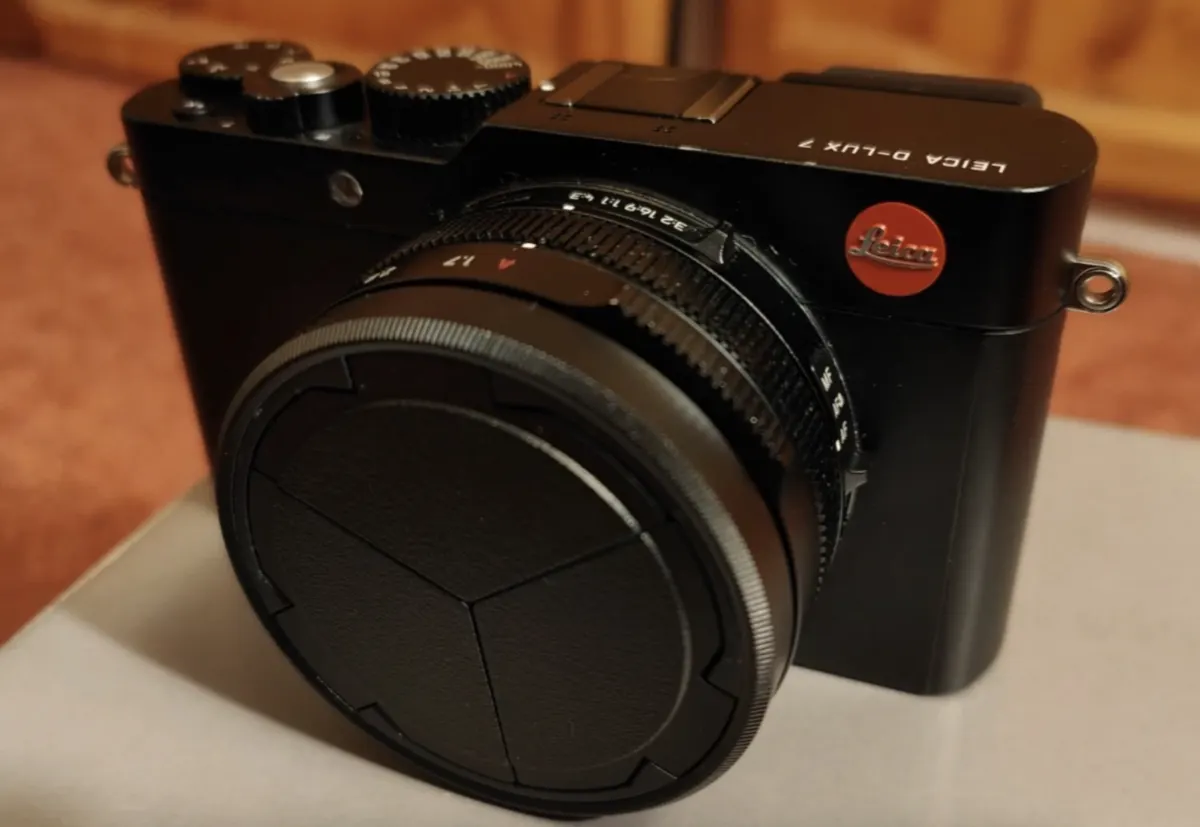
People ask about the Leica D-Lux 8 a lot. It is a lovely-looking fixed-zoom compact with a Four Thirds sensor and the red dot, at around £1,450. I could not get on with it: the start-up time simply is not good enough for street, where the whole game is being ready before the moment arrives.
And here is the thing nobody wants to hear. The D-Lux 8 is, underneath, a Panasonic Lumix LX100 II: the same lens, sensor and core camera, for roughly £500 less. Despite what people say, it really is the same camera. So if you want this camera, buy the Lumix and keep the £500.
And if what you actually want is a proper Leica, do not settle for the badge on a rebadged Panasonic, save for the real thing. The Leica Q3 (60.3MP full frame, a stunning fixed 28mm f/1.7) is a genuinely special camera at around £5,600. It is a lot of money, but it is a true Leica, and it is in a different league to the D-Lux.
Buy used, and remember the camera is the easy part
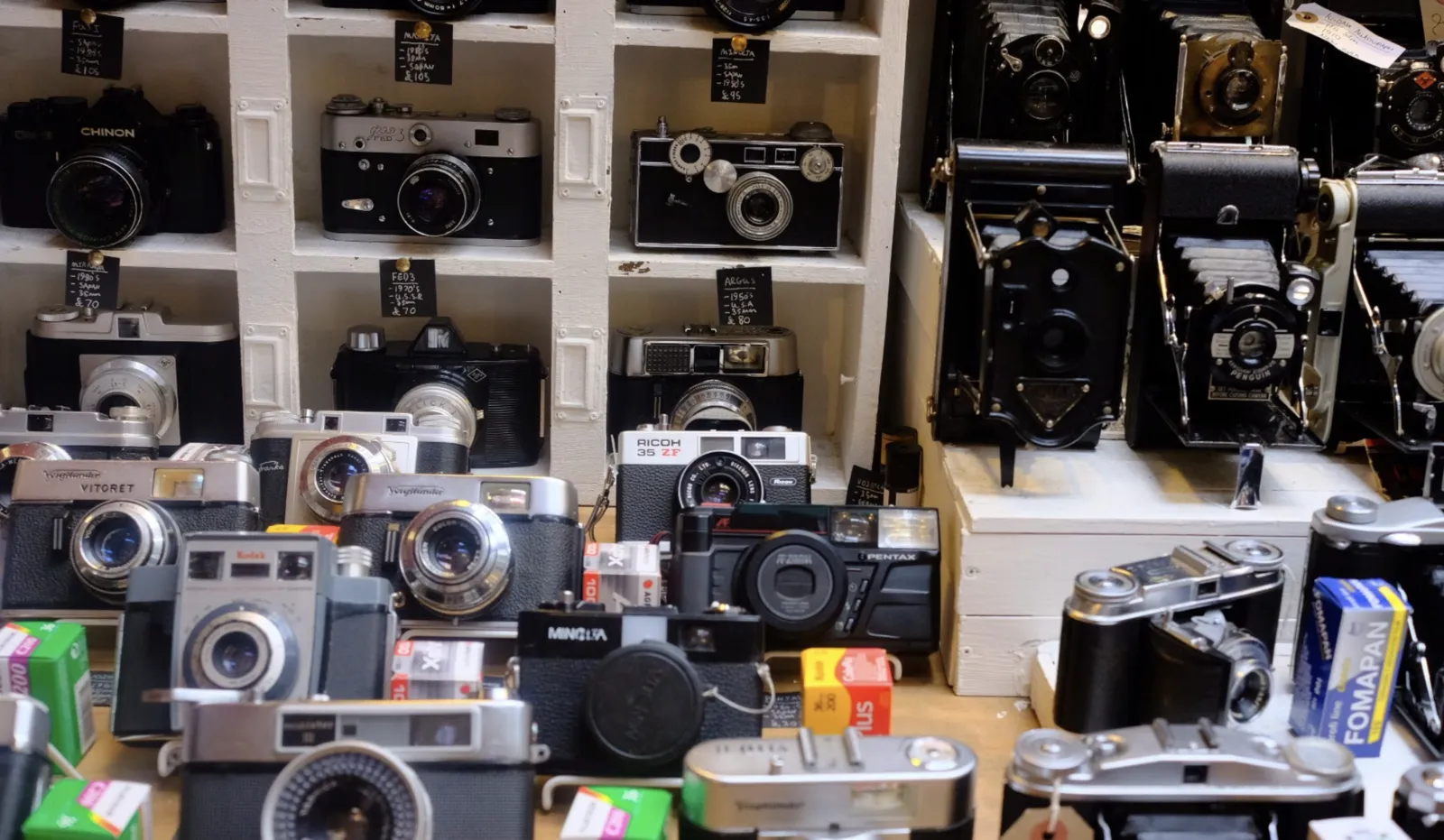
Almost everything here is worth buying used. Cameras depreciate fast, street photography is not kind to pristine gear anyway, and a body one generation old at 60% of the price frees up money for lenses or getting out and shooting. In the UK I would look at MPB and KEH; both grade condition honestly and offer warranties, and you can sell back to them when you upgrade.
One last thing, and I mean it. The camera matters far less than how often you use it. The best street photographers are not the ones with the best bodies, they are the ones who go out, again and again, with a reason to look. That is the whole idea behind the deck, and behind the free 7-day course: give yourself a prompt, and the camera in your hand becomes the right one. And when you want to sharpen your eye rather than your kit, spend time with the best street photography books.
Field Questions
What is the best camera for street photography?
For most people the Fujifilm X-E5 is the best all-round choice: small, fast, superb image quality and dials you can work by feel. If budget is tight, the Fujifilm X-M5 is outstanding value at around £799, and a used Fujifilm X-T2 is a brilliant camera for £400 to £550.
Do I need a full-frame camera for street photography?
No. APS-C and Micro Four Thirds cameras are smaller, more discreet and cheaper, which matters more on the street than sensor size. Full frame like the Nikon Zf is lovely if you want it, but it is a preference, not a requirement.
Is the Fujifilm X100VI worth it?
It is a superb camera, but it is expensive and still hard to buy, often only on pre-order. The X-E5 uses the same sensor and stabilisation, is usually in stock, and lets you change lenses, so unless you specifically want a fixed-lens camera, the X-E5 arguably offers more.
Is the Leica D-Lux 8 good for street photography?
It looks great, but in my experience the start-up time is too slow for street, where being ready quickly is everything. It is also essentially a rebadged Panasonic Lumix LX100 II, which costs around £500 less. Buy the Lumix, or if you want a true Leica, save for the Q3.
What is the best budget street photography camera?
A used Fujifilm X-T2 at roughly £400 to £550. It is a 2016 camera, but the files, colours and handling are still excellent, and it leaves money for lenses. Buy it used from a graded seller like MPB or KEH.