What is Street Photography?
Street photography is candid photography of everyday life in public. No permission asked, no scene arranged, no street strictly required — a beach, a market, a bus or a launderette all count. What defines it is not the location but the approach: real moments, found not made. This guide covers the whole genre — what it is, where it came from, how it works, and how to begin.
The definition, properly
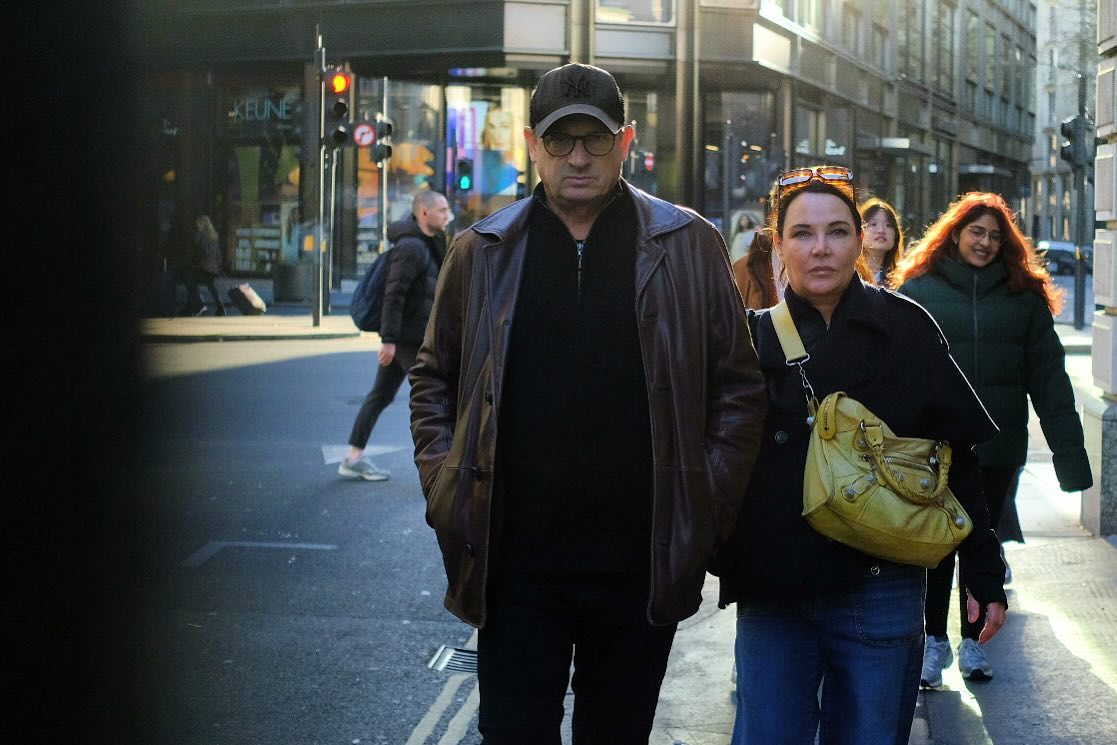
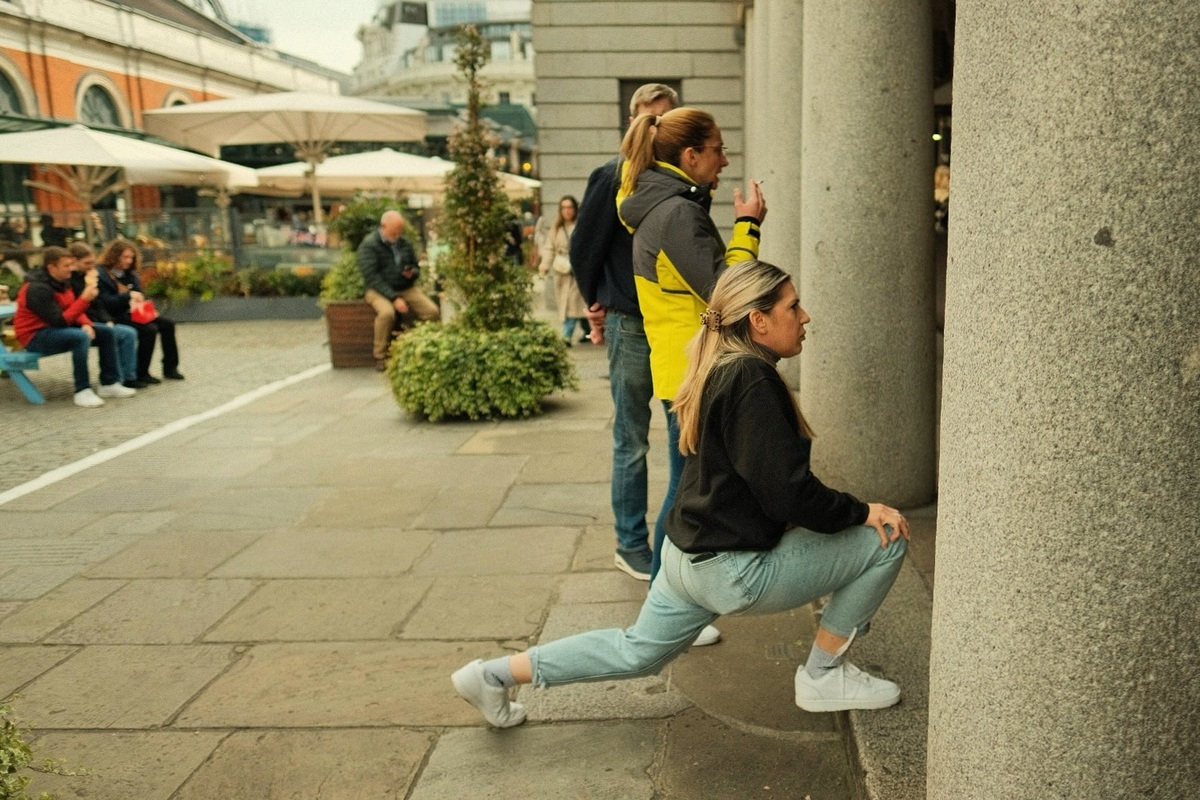
At its core, street photography is the unposed photograph of public life. The photographer observes rather than directs: nothing is staged, nobody is instructed, and the picture's value comes precisely from the fact that the moment was real and would have happened whether or not a camera was present.
Every word of that definition has an edge worth understanding.
Unposed separates it from portraiture and fashion. The moment a photographer arranges the scene, the picture becomes something else — often something good, but not street photography.
Public separates it from documentary projects made with access and permission. Street photography works in the shared spaces everyone can stand in, which is why its legal footing (covered fully in our UK street photography law guide) matters to the genre's existence.
Life is the loosest and most important term. People are the genre's usual subject, but a street photograph does not require a visible person — a coat left on a bench, a shadow crossing a wall, a shop window mid-conversation with the street all qualify, because they carry human presence without showing a human. What a street photograph cannot survive without is evidence of life. Remove that and you have an urban landscape: a fine genre, but a different one — the urban landscape wants to be beautiful, while the street photograph wants to be interesting.
And the street itself is optional. The genre's name is an accident of history, not a rule. Beaches, markets, cafés, trains, seaside promenades, launderettes and school fetes are all street photography territory. If the public is living its life there, the genre applies.
Where it came from
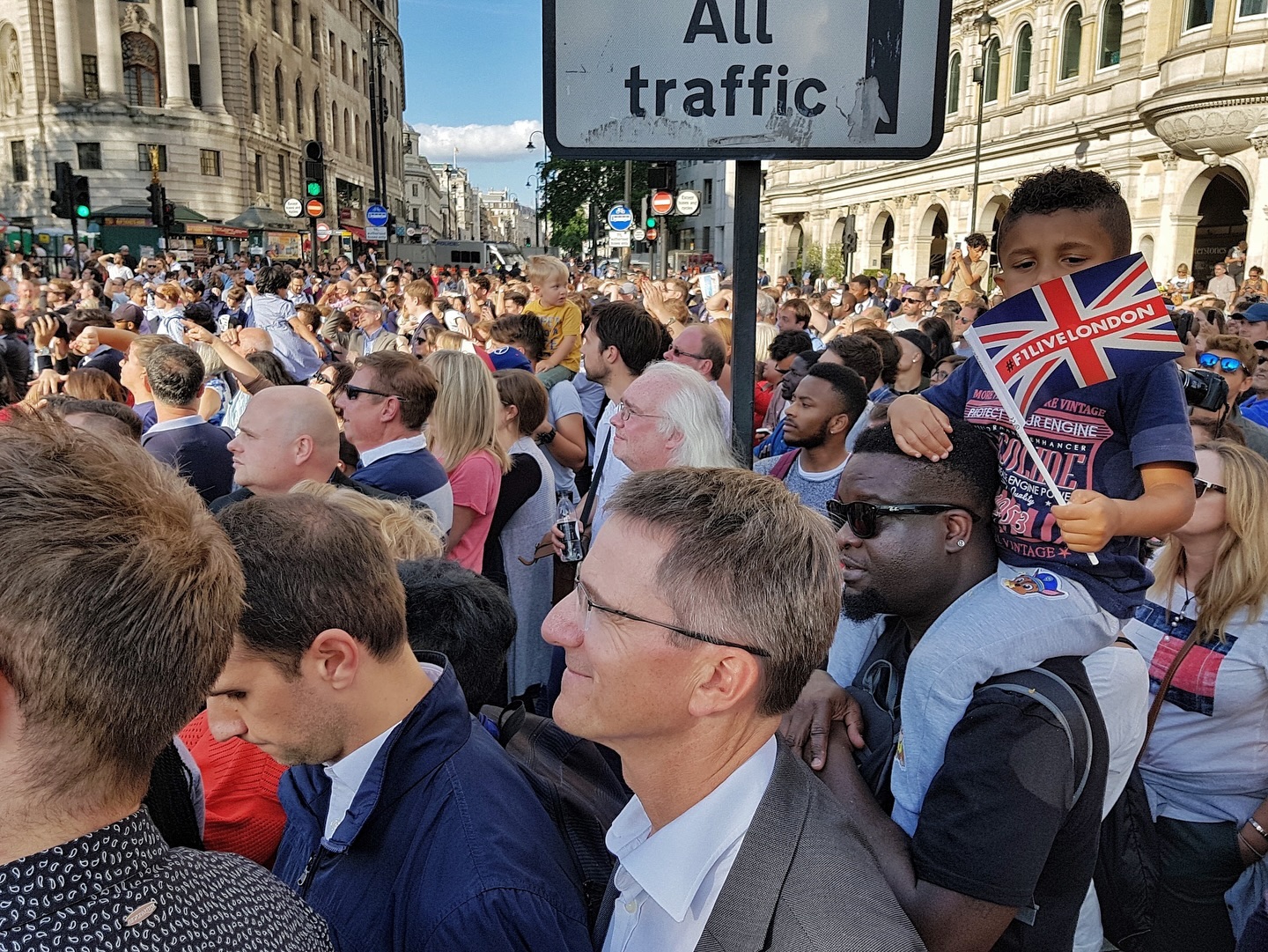
Street photography is roughly as old as the portable camera, because the genre is portability. Nineteenth-century cameras needed tripods and long exposures, so the surviving street scenes of that era are mostly empty streets — people moved too fast for the plates. As cameras shrank and film quickened around the turn of the twentieth century, photographers like Eugène Atget documented Paris obsessively, and the idea of the city as a photographic subject took root.
The decisive tool arrived in 1925: the Leica, a camera small enough to carry everywhere and fast enough to shoot life at life's speed. Within a generation, Henri Cartier-Bresson had built both a body of work and a philosophy around it — the idea, published in his 1952 book, that a scene's elements briefly align into their strongest arrangement, and the photographer's art is recognising and catching that instant. The phrase 'the decisive moment' became the genre's founding doctrine.
Post-war America gave street photography its rebellious second act: Robert Frank's The Americans (1958) traded elegance for rawness and changed what a photobook could be; Garry Winogrand shot New York with omnivorous hunger; Helen Levitt found lyricism in children's chalk games; Diane Arbus took the candid camera towards psychology. Then colour — long dismissed as commercial — was claimed for art by William Eggleston and Saul Leiter, and the genre's palette permanently widened.
Britain built its own tradition, and it matters to this site: Tony Ray-Jones photographed the English at leisure in the 1960s with affection and absurdity in equal measure, and Martin Parr pushed that seaside, high-street observation into saturated colour in the 1980s. The British strain of street photography — class, weather, ritual, the gap between how we imagine ourselves and how we look eating chips in the wind — remains one of the genre's richest veins, and it is shot in exactly the weather this country actually has.
Today the genre is bigger than it has ever been: billions of capable cameras in pockets, a global online community, and festivals and collectives worldwide. The tools changed completely. The job — noticing, framing, catching — has not changed at all.
The photographers worth studying
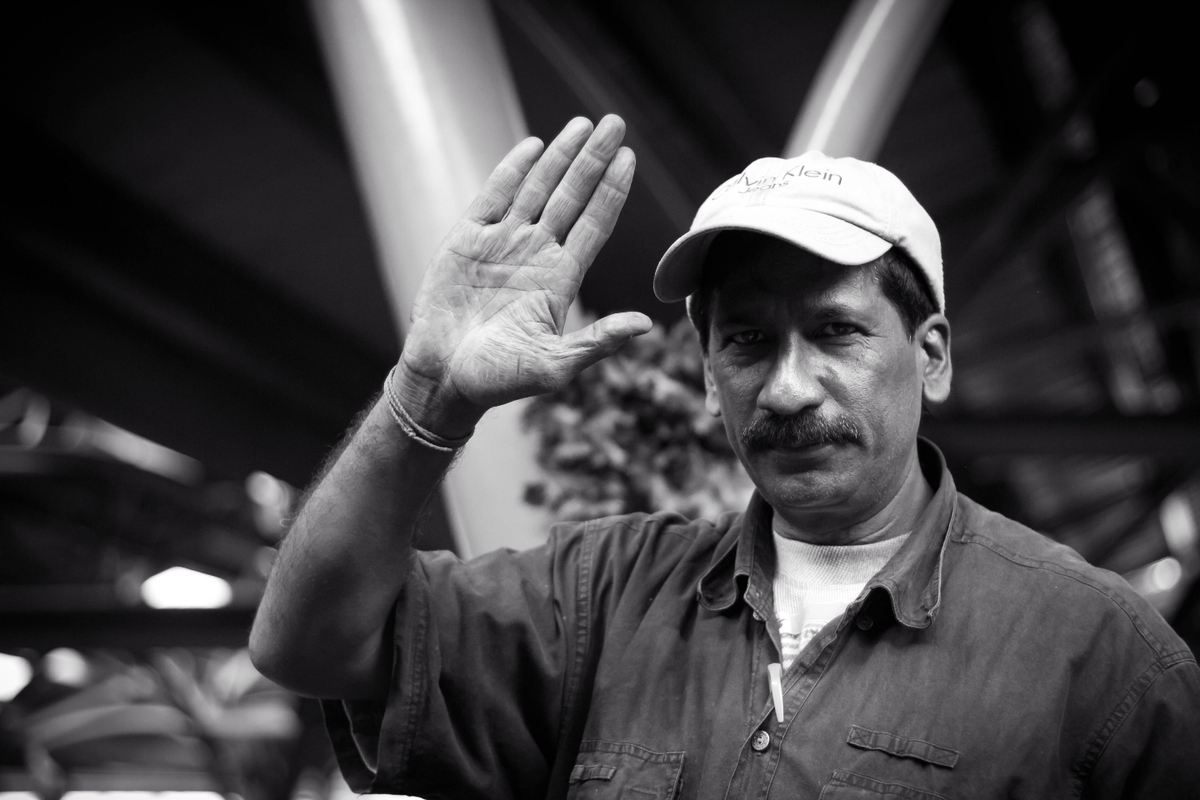
The fastest way to understand street photography is to look hard at the people who defined it. A starting syllabus, grouped by what each teaches:
The foundations: Henri Cartier-Bresson (geometry and timing), Robert Frank (mood and sequence), Helen Levitt (warmth and play), André Kertész (the poetic everyday).
The Americans at full volume: Garry Winogrand (energy, tilt, appetite), Lee Friedlander (complexity and self-awareness), Joel Meyerowitz (colour and patience), William Klein (confrontation and grain), Diane Arbus (the portrait as question).
The colourists: William Eggleston (the mundane made monumental), Saul Leiter (abstraction, reflection, umbrellas), Alex Webb (layered complexity in hard light).
The British line: Tony Ray-Jones (the English at leisure), Martin Parr (satire in saturated colour), Shirley Baker (working-class streets photographed from inside them).
The wider world: Daido Moriyama (Tokyo, blur and grain as language), Josef Koudelka (exile and theatre), Vivian Maier (the private eye, discovered posthumously), Jamel Shabazz (community photographed with love).
Study them in books rather than feeds where you can — sequenced work teaches editing as well as shooting. And study contact sheets when published: seeing the near-misses around the famous frames is the single most reassuring education in photography.
What makes a street photograph good
Pointing a camera at a stranger does not make a street photograph, and the flood of mediocre work online proves it daily. The frames that hold attention share recognisable ingredients:
A subject the eye can find. Not necessarily a person — but something the picture is about, reachable within a second of looking. Chaos with no anchor is the genre's most common failure.
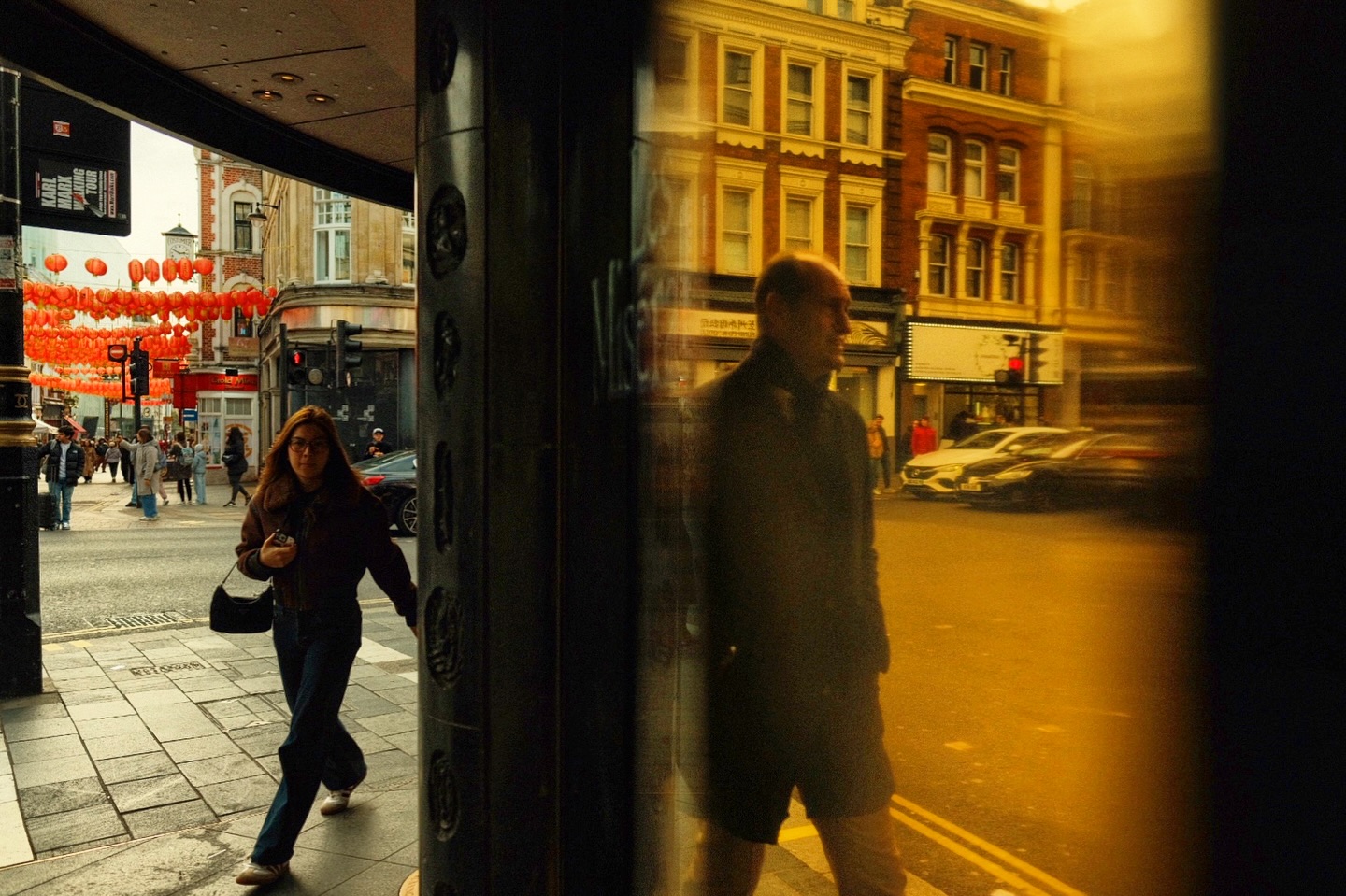
Light doing work. The best street photographers are light-first: they find the shaft, the reflection, the glow, then wait for life to enter it. Hard midday light, the kind other genres avoid, is a street asset — pockets of brightness and deep shadow to compose with.
A moment. Gesture, expression, alignment, coincidence — the thing that existed for a quarter of a second and now exists permanently. This is the decisive-moment doctrine in practice, and anticipation matters more than reflexes: read the scene, predict the collision, be ready.
Composition under pressure. The classic tools — leading lines, frames within frames, layers, juxtaposition, negative space — all apply, deployed in seconds rather than minutes. The skill is built by repetition until it becomes instinct. Our glossary defines every one of these terms.
Something underneath. The photographs that last have a second layer — a question, a joke, a tension, a small truth about how we live. Beauty is optional. Interest is not.
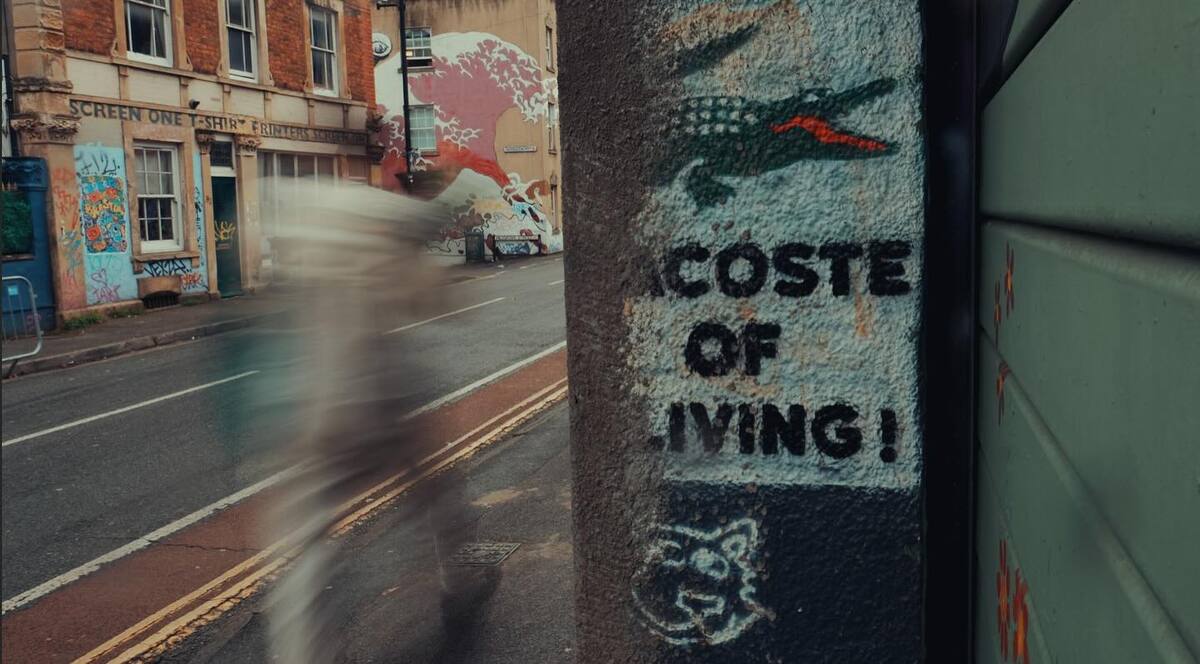
Imperfection, meanwhile, is not on the fault list. Tilted horizons, motion blur and grain are part of the genre's native language — a street photograph should feel as alive as the moment it caught.
Cameras, lenses and what actually matters
The genre's gear truth is liberating: any camera works, and smaller is better. Street photography was defined on cameras far less capable than the phone in your pocket.
What genuinely helps:
Small and quiet. A discreet camera changes your behaviour more than the public's — you carry it more, raise it faster, and stop performing 'photographer'. Compact mirrorless bodies and fixed-lens compacts are the genre's modern standard; a phone is a legitimate street camera and always with you.
One prime lens. A single focal length — classically 28mm, 35mm or 50mm equivalent — teaches you to see frames before the camera reaches your eye, because the frame never changes. Zooming with your feet is not a compromise; it is the training.
Comfort over capability. Street photography is walking. Ten kilometres is an ordinary session, so the camera you will actually carry beats the better camera you leave at home — and comfortable shoes outrank every accessory.
What does not matter: sensor size debates, autofocus benchmarks, bag capacity. The genre's technical demands are modest and were solved decades ago. Spend the money on books and the time on walking.
Settings: the starting points
Street settings optimise for one thing: readiness. The scene will not wait while you configure.
The classical approach pre-sets everything — zone focus at f/8 around two metres, exposure set by the Sunny 16 rule, camera at chest height, whole frames caught before autofocus would have locked. The modern approach delegates — aperture priority at f/5.6 to f/8, auto ISO with a minimum shutter speed of 1/250, autofocus on. Both are correct; both keep your eyes on the street instead of the dials.
Starting points that serve almost every situation:
| Situation | Approach | Starting point |
|---|---|---|
| Bright sun | Manual / Sunny 16 | f/16, 1/ISO — or the f/8 equivalent for depth |
| Overcast | Aperture priority | f/5.6–f/8, auto ISO, min shutter 1/250 |
| Night | Shutter-led | 1/125–1/250, ISO 3200–6400, wide open |
| Fast action | Pre-set zone focus | f/8, focus at 2m, shutter 1/500 |
The fear, the law and the ethics
Every street photographer starts with the same three anxieties, and all three have real answers.
The fear of photographing strangers is a confidence skill, not a personality trait — it responds to scripts, body language and graduated practice, all covered in how to approach strangers. The short version: openness reads as photography, furtiveness reads as threat, and almost every encounter you are dreading ends in a nod or a conversation.
The law, in the UK, is on your side: photographing people in public places is lawful, no consent or permit required, and nobody — police included — can make you delete an image without a court order. Private land, harassment and commercial use are where the limits live. The full picture, including what to say if challenged, is in the UK street photography law guide.
The ethics are yours to build, and the law is only their floor. The genre's best tradition photographs people with interest rather than contempt, treats vulnerability as a reason to lower the camera, holds a higher bar around children than the law demands, and accepts that some frames are better deleted. A useful test for any difficult picture: would you stand behind it if the subject saw it? Photographers who shoot from warmth make better pictures anyway — contempt is always visible in the frame.
How to actually start
Street photography has the lowest barrier to entry in photography — you own a camera, you live near a public, you can start this afternoon. What stops beginners is never equipment; it is the blank slate. 'Go and take great photos' is an unanswerable brief, and unanswerable briefs keep people indoors (the psychology, and the fix, are covered in Getting Out the Door).
The method that works:
Give every outing one job. One technique, one colour, one corner, one hour. Constraints turn the infinite street into a solvable problem — this is the entire design principle behind the Street Manual deck, and the free cards exist so you can test it today.
Go where life is dense. Markets, high streets, seafronts, events — busy places make cameras invisible and put more moments per minute in front of you. Our location guides map the good ground.
Judge sessions by process, not keepers. One or two good frames per outing is a good day for every photographer who has ever lived. The masters' contact sheets prove it. Volume, repetition and honest editing are the whole path — there is no other.
Look at great work constantly. Books over feeds, projects over singles. Your eye improves by ingestion as much as by practice.
The genre asks almost nothing to begin and offers decades of depth once begun. It is the cheapest, most available, most repeatable creative practice there is — the street resets daily, and it is outside your door right now.
Field Questions
What is street photography in simple terms?
Candid, unposed photography of everyday life in public places. Nothing is staged and nobody is directed — the value of the picture comes from the moment being real. Despite the name, it does not have to happen on a street: markets, beaches, cafés and trains all count.
Does street photography have to include people?
No, but it needs evidence of life — a shadow, a left-behind object, a lit window. A frame with no human trace is an urban landscape, which is a different genre: urban landscapes aim to be beautiful, street photographs aim to be interesting.
Is street photography legal in the UK?
Yes. Photographing people in public places is lawful in the UK without consent or permits, and no one can force you to delete images. Limits apply on private land, around harassment, and for commercial advertising use of a recognisable person's image.
What is the best camera for street photography?
The small one you will actually carry. A compact mirrorless or fixed-lens camera with a single 28mm, 35mm or 50mm-equivalent prime is the genre's standard, and a phone is entirely legitimate. Nothing about street photography requires expensive equipment.
What settings should I use for street photography?
Optimise for readiness. Modern default: aperture priority at f/5.6–f/8, auto ISO, minimum shutter 1/250. Classical default: zone focus at f/8 around two metres with exposure set by Sunny 16. Both keep your attention on the scene rather than the camera.
How do I start street photography as a beginner?
Start today, with any camera, in the busiest public place near you — and give the outing one specific job (one technique, one colour, one corner) rather than a vague hope of good photos. Constraints beat inspiration. Expect one or two keepers per session; that is a normal rate for everyone.
Who are the most famous street photographers?
Henri Cartier-Bresson, Robert Frank, Garry Winogrand, Helen Levitt, Vivian Maier, William Eggleston, Saul Leiter, Daido Moriyama and Joel Meyerowitz are core to the canon; in Britain, Tony Ray-Jones, Shirley Baker and Martin Parr defined the national tradition.
What is the decisive moment?
Henri Cartier-Bresson's idea that a scene's elements briefly align into their strongest arrangement, and the photographer's art is catching that instant. In practice it is a skill of anticipation — reading a scene and being ready — rather than reaction speed.