A Free London Street Photography Walk
You have arrived at King's Cross or St Pancras with a camera and a free day. This is exactly what I would do with it. It is the self-guided street photography walk I actually do: one short tube ride, then a full day on foot through the West End, Soho, Covent Garden and the South Bank, ending back where you started on the Thameslink. It costs nothing beyond your travel, most of the good bits are free, and at every stop I have said where to stand, what to look for and one thing to try. Before you set off it is worth two minutes on your rights in public, and if you would like a prompt in your pocket for the day, the free 7-day course is a good companion.
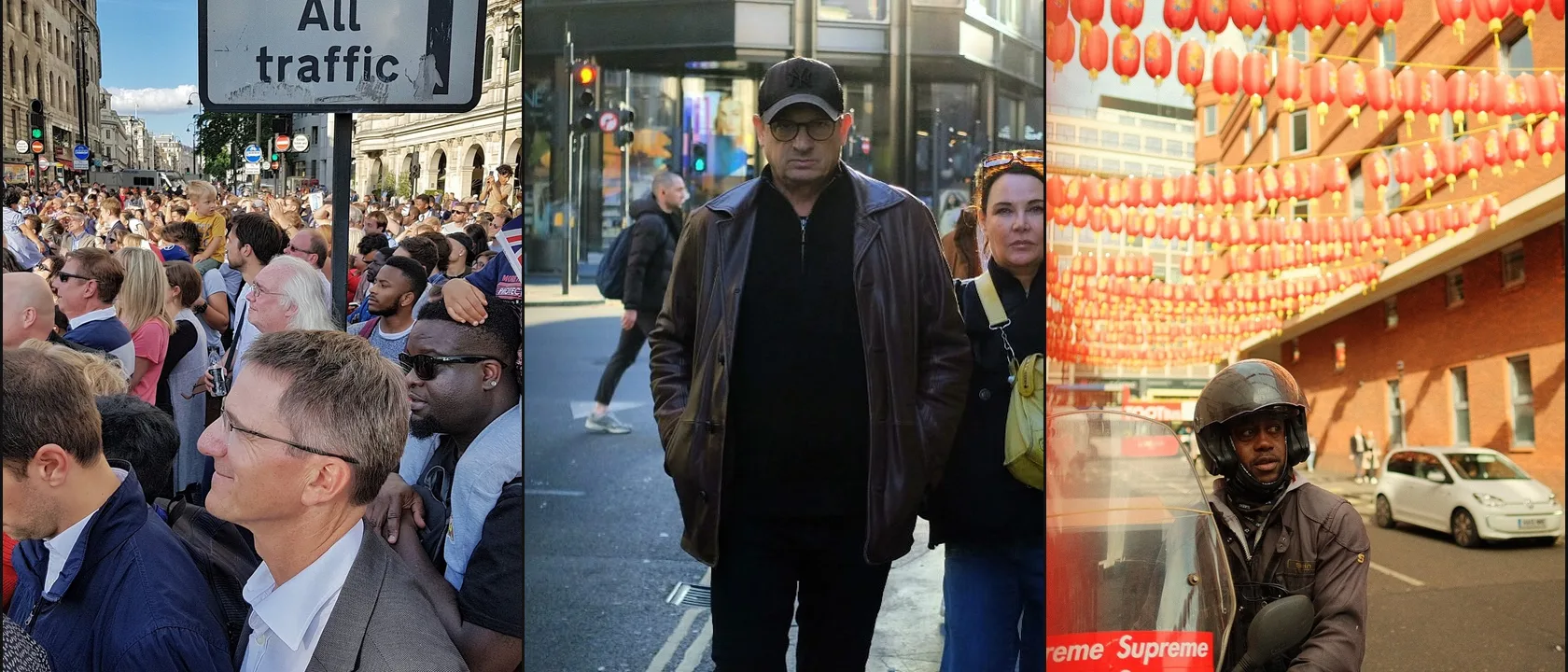
Free 7-day course
Learn street photography, free
One short lesson a day for a week to get you out shooting, plus a pocket cheat sheet.
The route at a glance
The whole loop is about 8 km, a shade over 5 miles. Pure walking is roughly two to two and a half hours; add the stops and it fills an unhurried day, five to six hours. It is almost all on foot: one short tube from King's Cross to Oxford Circus, about five minutes on the Victoria line, and then you are walking until the train home. Do the lot, or split it, since the West End half (Oxford Street to Covent Garden) and the river half (South Bank to the Barbican) each stand alone as a half-day.
The table below has rough walking times between each stop so you can plan around your day. Timing matters for the light too: weekday mornings give you cleaner frames and softer light, while late afternoon into evening gives you energy, crowds and neon, especially in Soho and Chinatown. If you can, start west in the morning and reach the river as the light drops.
| Stop | What it is for | Walk to next |
|---|---|---|
| Oxford Circus | Crowds, crossings, red buses, reflections | 3 min |
| The Photographers Gallery | Inspiration, a coffee, a warm-up | 10 min |
| Soho & Chinatown | Neon, markets, characters, colour | 10 min |
| Covent Garden | Performers, the piazza, people at play | 8 min |
| Trafalgar Square | Buskers, protests, crowds, the fountains | 15 min |
| Southbank Undercroft | Skaters, movement, energy | 20 min |
| Tate Modern | Light, scale, silhouettes (free) | 12 min |
| Bankside to Borough | Millennium Bridge, the Globe, market colour | 22 min |
| The Barbican | Brutalist concrete, gardens, juxtaposition | 6 min |
| Farringdon | Thameslink home to St Pancras | — |
Start: King's Cross to Oxford Circus
From St Pancras or King's Cross, take the Victoria line two stops to Oxford Circus. If the weather is good and you fancy it, you can also walk down through Bloomsbury in about half an hour and warm up on the way. Either works.
Come up at Oxford Circus and you are straight into it: the crossing, the double-deckers, the river of shoppers. This is a place to shoot layers and lines rather than faces. Stand still at the corner and let the crossing fill and empty, watch for a red bus to slide through behind a subject, and use the kerbs and crossings as leading lines to pull the eye. Shopfront glass gives you easy reflections. Give it ten minutes before you move; the good frame usually comes to the person who waits. More on this stretch in the Oxford Street guide.
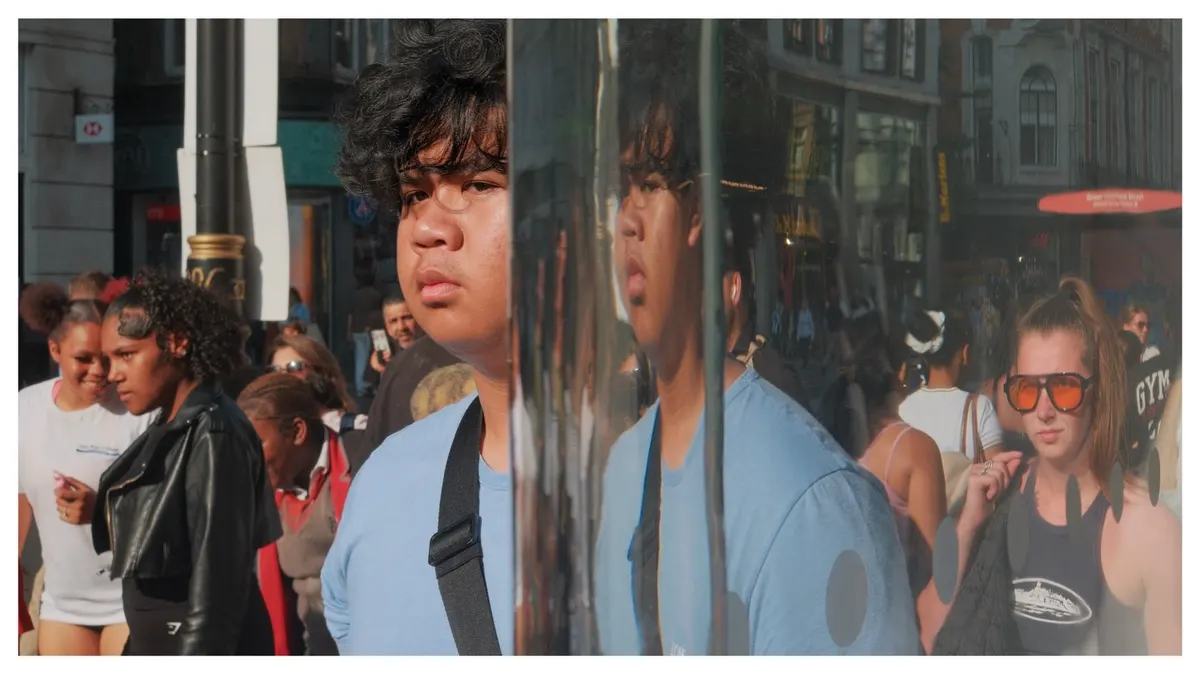
A warm-up stop: The Photographers’ Gallery
Just off Oxford Street on Ramillies Street is The Photographers' Gallery, and it is worth a stop. The café is a lovely spot for coffee and cake, with good vegan options, and both the café and the photography bookshop are free to walk into. There is also a free exhibition on the lower floor that anyone can see without paying or being a member. The wider exhibitions upstairs need a ticket or membership, and if you are in London often the membership is genuinely worth it and comes highly recommended. Either way it is a great early stop: caffeine, inspiration, the best photo-book selection in central London, and a clean toilet before Soho.
The heart of it: Soho and Chinatown
This is where the walk earns its name. Drop south into Soho and slow right down. Berwick Street market, the record shops, the doorways, the after-work crowds; it is dense, layered and full of character. Work one good spot rather than rushing through: find a strong background, a patch of light or a bold sign, and wait for someone to complete it (working a scene), or shoot a relaxed candid as the crowd flows past.
A few streets on, Chinatown gives you red lanterns, the gates on Gerrard Street, steam off the kitchens and colour everywhere. It is made for colour hunting, and the light between the buildings turns beautifully moody in the late afternoon. If you are shy about shooting close, this is the place to practise, because everyone up here has a camera. Full detail in the Soho and Chinatown guides.
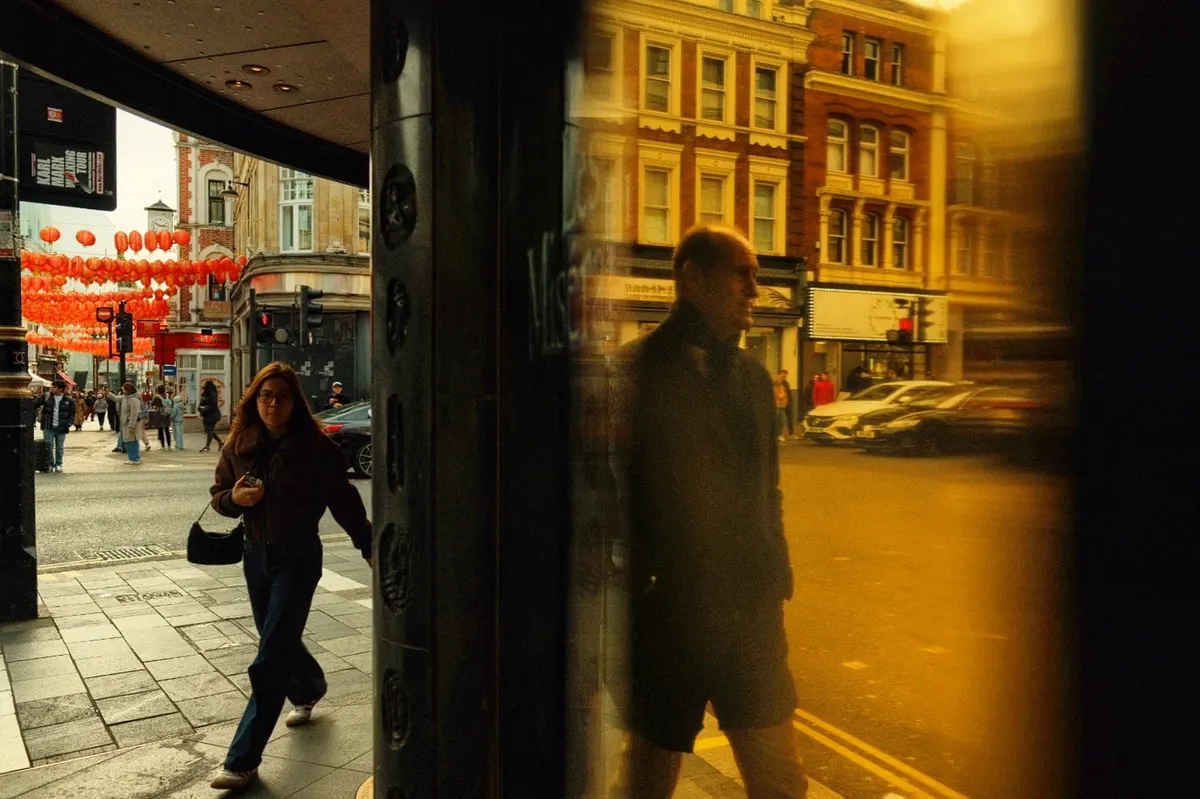
Covent Garden
From Chinatown it is a short walk to Covent Garden. The piazza is touristy, and that is the point: street performers working the crowd, buskers under the arches, the covered Apple Market, and people at their most unguarded because they are watching the show, not you. Get up onto the balcony by the terrace bars for a clean top-down view of a performer and their ring of onlookers, or stay at ground level and shoot the reactions rather than the act, which is where a decisive moment lives. Buskers are used to cameras, so it is an easy, friendly place to shoot people close.
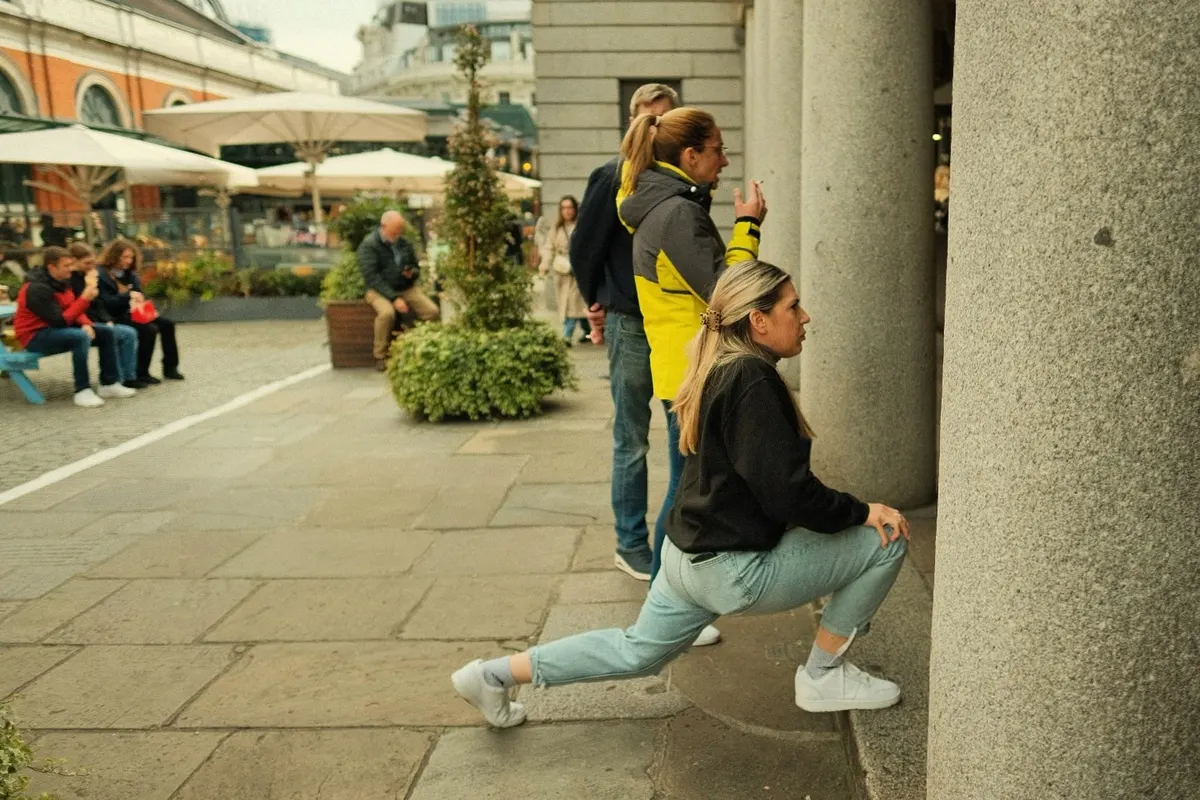
Trafalgar Square
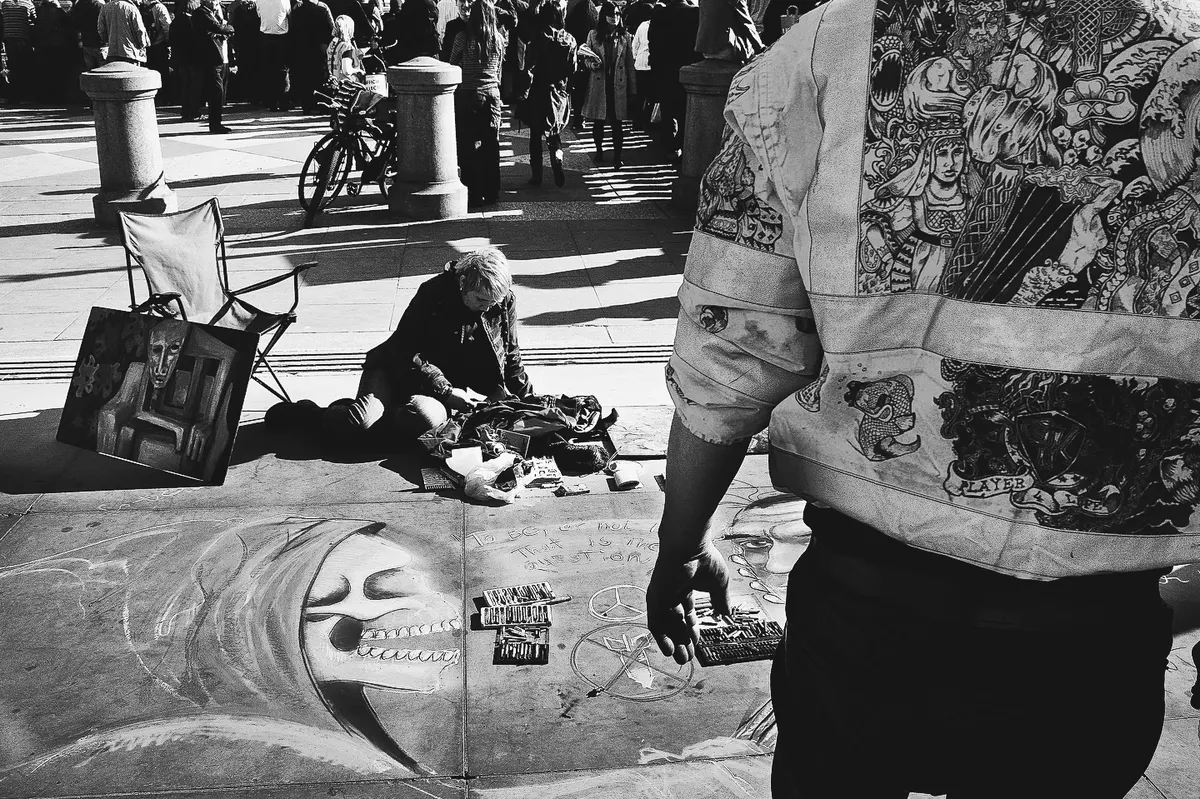
From Covent Garden it is a five-minute walk down to Trafalgar Square, and it earns its place because there is always something on: buskers and living statues, a protest or a rally, tourists up on the lions, pigeons, and whatever has taken over the Fourth Plinth. It is a natural theatre, which makes it easy shooting. Work the crowd around a protest or a performer, catch a bit of eye contact as people pose on the steps, or just shoot relaxed candids while everyone watches the show. The National Gallery steps give you a raised view over the whole square.
Down to the river and over to the South Bank
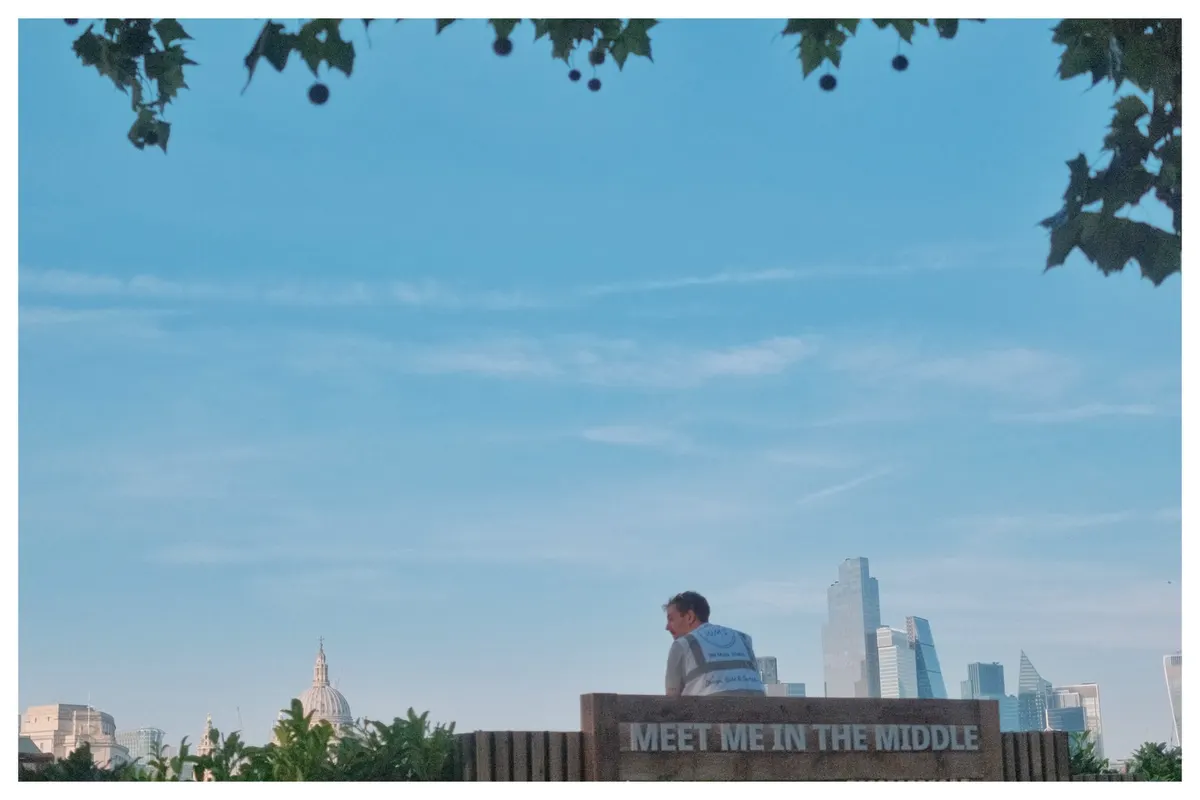
From Trafalgar Square, walk down Northumberland Avenue to the river and cross on the Golden Jubilee footbridges beside Hungerford Bridge. They give you one of the best free views in London: the Eye and Westminster to your right, St Paul's and the City to your left, the whole South Bank ahead. On the far side you drop straight onto the riverside walk by the Southbank Centre, and from here to the end it is one long, photogenic stretch beside the Thames.
The South Bank: the Undercroft
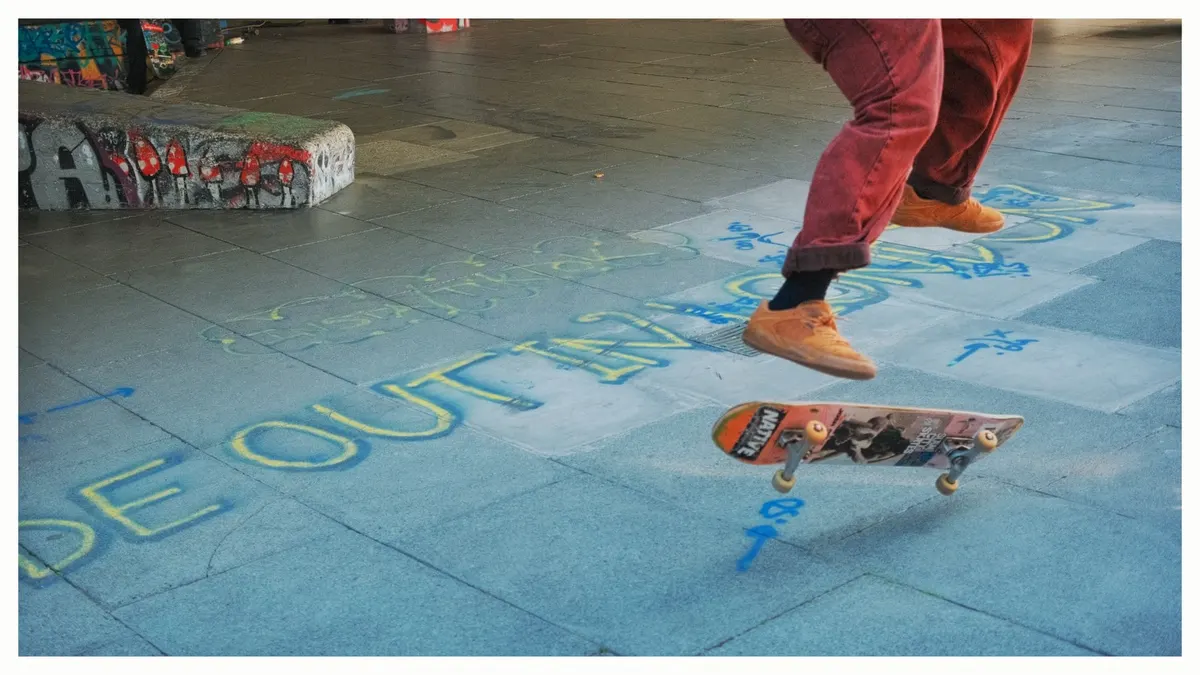
First up is the Undercroft, the skate space beneath the Queen Elizabeth Hall. It is free, open around the clock, and as of 2026 it is Grade II listed, so it is not going anywhere. The skaters and BMXers are used to being photographed and happy to be shot, which makes it the best place on the walk to practise movement: panning a rider along the wall for motion blur with a sharp subject, or a fast shutter to freeze a trick in mid-air.
Tate Modern
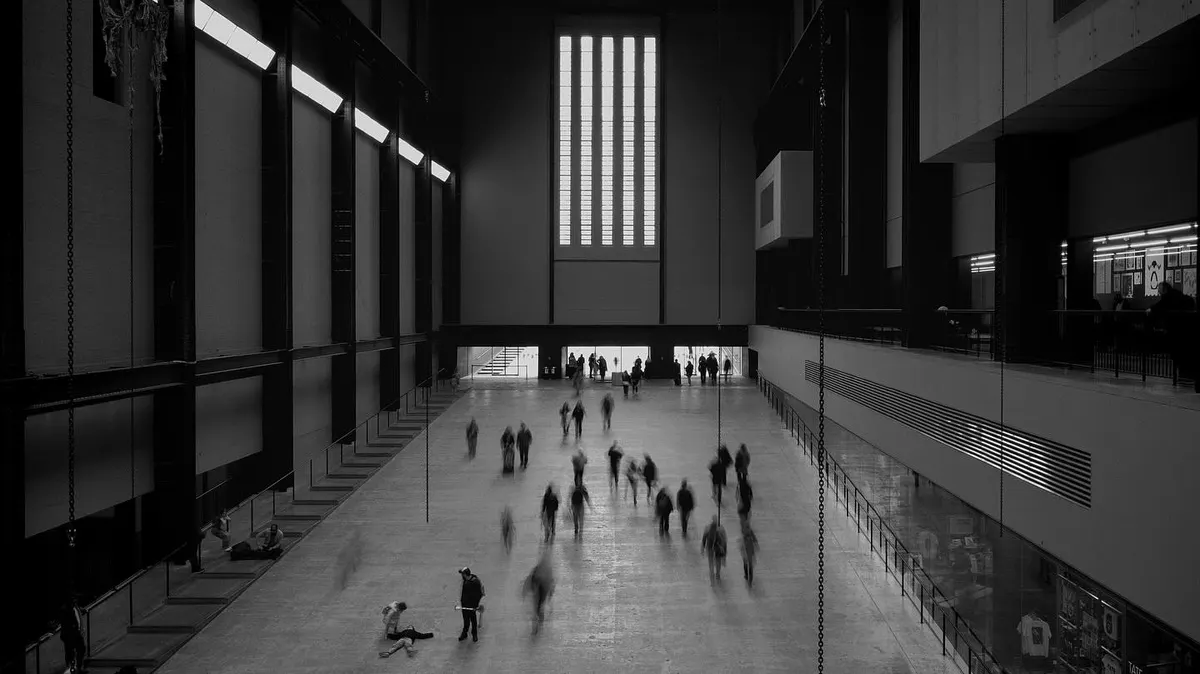
Carry on east past the Southbank Centre and the National Theatre, which are superb concrete backdrops, the book stalls under Waterloo Bridge, Gabriel's Wharf and the OXO Tower, and you reach Tate Modern. Entry is free. The Turbine Hall, the walkways and the upper levels are full of huge light, deep shadow and people reduced to silhouettes against the windows. Handheld shooting is fine throughout; just note that a few Southbank Centre terraces and the odd private forecourt set their own rules, so keep it handheld and considerate.
Bankside, Borough Market and the Shard
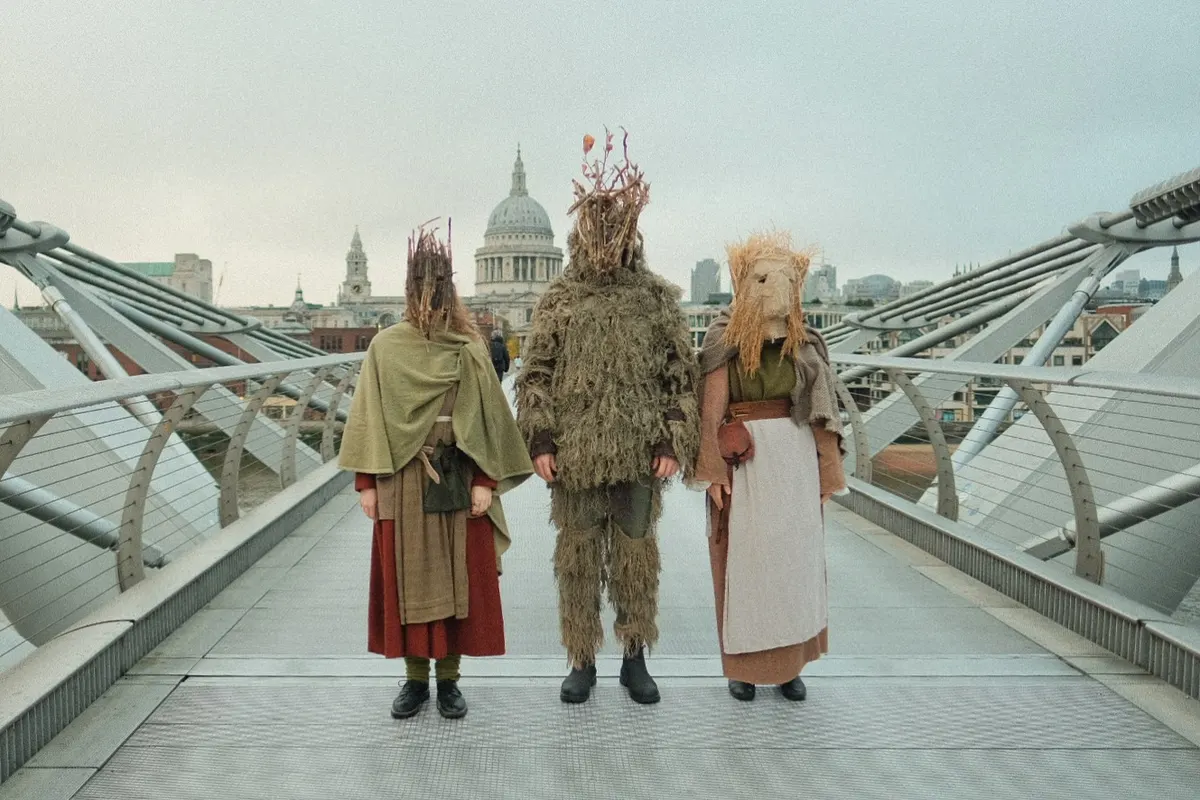
Outside the Tate is the Millennium Bridge, with the classic straight-on view of St Paul's, so shoot the commuters streaming across it, working from the hip for the quick ones. Then keep going east along Bankside, past Shakespeare's Globe, towards Borough Market. The market is a gift: tight, busy, colourful, full of food and faces, with light cutting through the railway arches. Shoot from a little distance while everyone is distracted by the stalls, then get in closer for a candid once your eye is warm. Behind it all the Shard looms, good for scale and geometry. This is the richest people photography of the whole day, so leave time for it.
The Barbican: brutalism meets the gardens
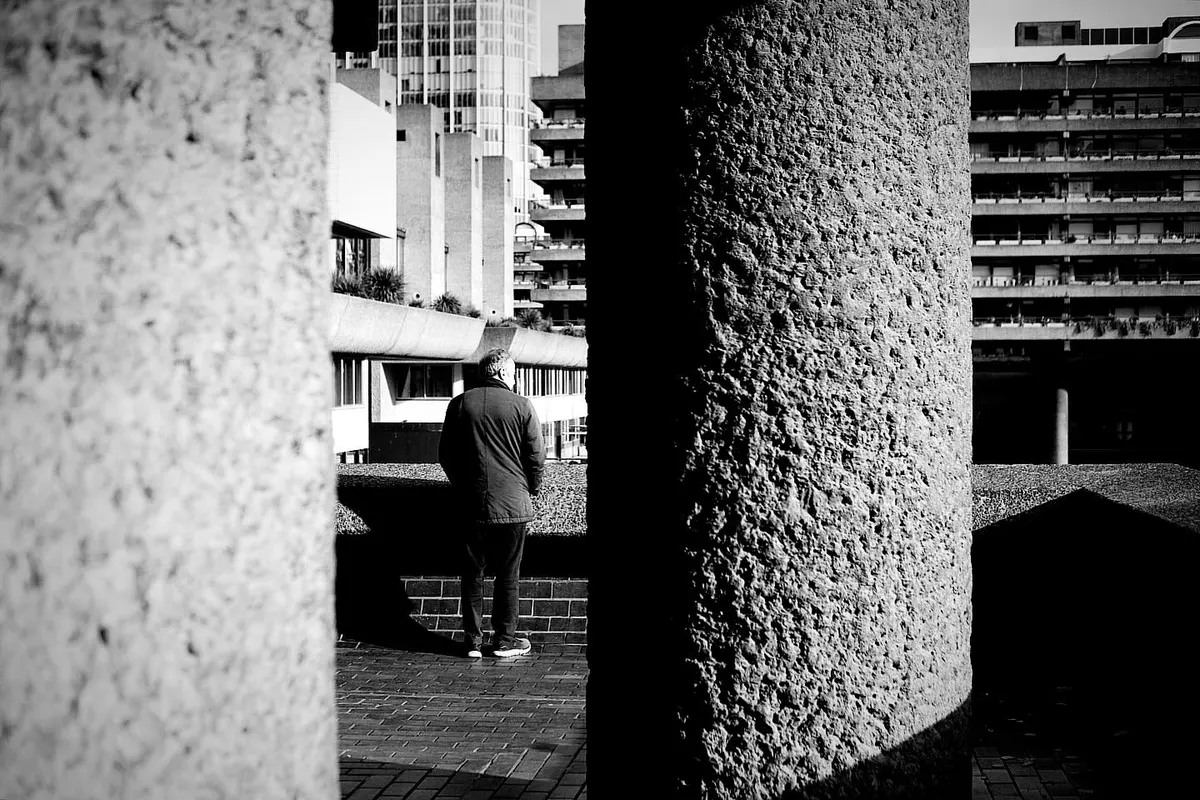
On the way to Farringdon, make time for the Barbican. It is the best brutalist architecture in London: raw concrete walkways, towers, water gardens and hard geometry in every direction. The gift for a photographer is the contrast, all that grey concrete softened by the planting, the lakeside terrace and the tropical conservatory, with people crossing the high walkways as small figures against the scale of it. Shoot the juxtaposition of soft and hard, the old and new where the estate meets the City, and use the repeating arches and walkways as strong graphic lines. From here it is a short step up to Farringdon.
Getting home: the Thameslink loop
Here is the neat part. From the Barbican it is only a couple of minutes up to Farringdon, where the Thameslink takes you straight back to St Pancras, two or three minutes and you are where you began. If your feet had enough back at the river, Blackfriars station sits right on the Bankside riverside and is also on the Thameslink, and London Bridge is a short walk east; all three get you home without changing. Farringdon also has the Elizabeth line if you are heading further out. One loop, no backtracking, camera full.
Bonus for a long day: Leake Street
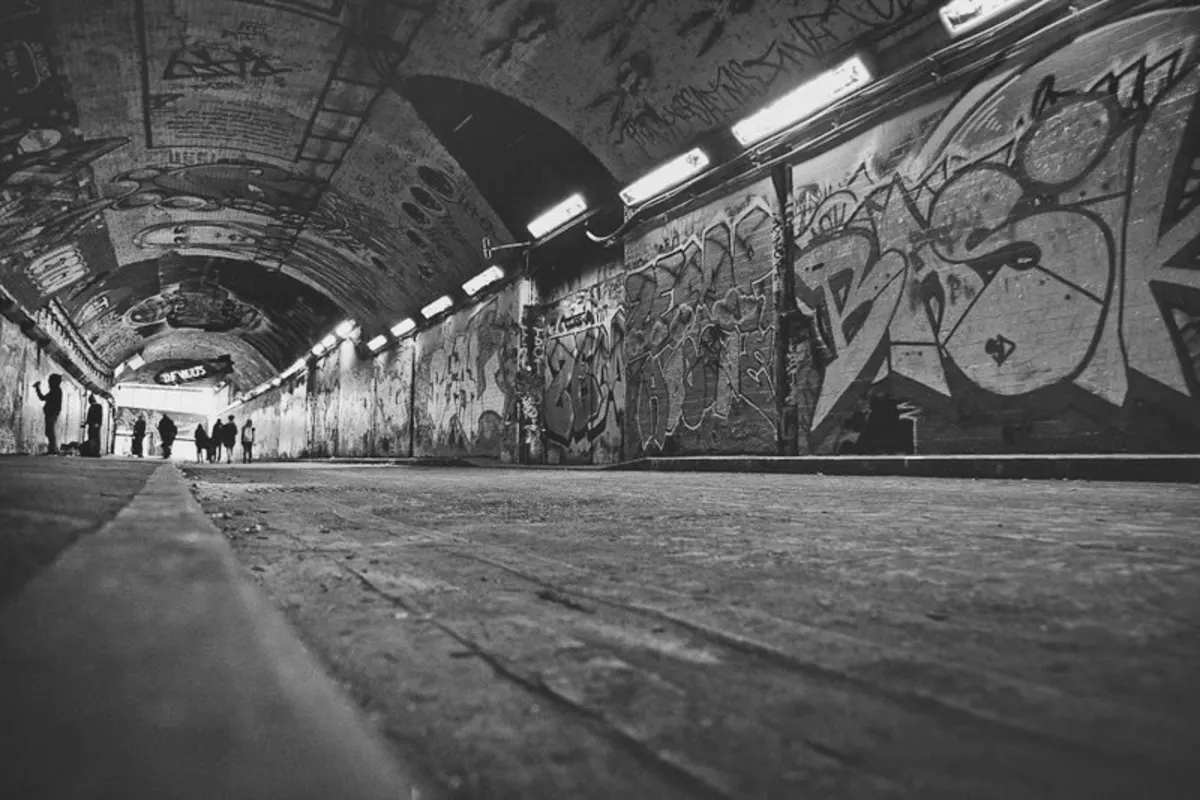
For anyone with the legs for a longer day, here is the best add-on. Leake Street is the graffiti tunnel that runs under Waterloo station, a long, dim, ever-changing corridor of spray paint that is legal to paint and open to all. It is a brilliant backdrop: bold colour and lettering, artists at work, and pools of hard light under the strip lamps, made for street art and people and for silhouettes down the length of it.
It sits by Waterloo at the western end of the South Bank, so fold it into the river leg if you pass it, or make a dedicated trip. One tip from experience: not every artist wants to be photographed while they work, and I have been asked to stop before. Read the room, ask if in doubt, and it is worth two minutes on what to do when someone asks you to delete a photo before you go.
What to bring, and what it costs
The only cost is travel. Pay by contactless and the Zone 1 daily cap keeps a full day of tube and train to under a tenner. Everything else on this list, the streets, the South Bank, the Undercroft, Tate Modern, Borough Market, is free to shoot.
Before you head out, run through the photo walk checklist: charged batteries, empty and formatted cards, the right lens and comfortable shoes. A two-minute check saves a ruined day.
Travel light. One small body and a single 28mm to 40mm equivalent lens is plenty, and comfortable shoes matter more than any lens (here is what I would carry). Bring water, and know that the Photographers' Gallery café, Borough Market and the South Bank all sort out food and toilets.
Two last things. Central London tourist crowds are pickpocket territory, so keep your bag zipped and your spare kit close. And photographing people in public is legal in England and Wales; be relaxed and considerate, shoot openly rather than furtively, and if someone genuinely objects, be gracious. If nerves are the thing holding you back, the guide on approaching strangers is five useful minutes.
Field Questions
Is this London street photography walk really free?
Yes. The route itself costs nothing, and you only pay for travel, which contactless caps at under £10 a day in Zone 1. The streets, the South Bank, the Undercroft skate space, Tate Modern and Borough Market are all free. The only ticketed stop is The Photographers’ Gallery, and even there the café, the bookshop and a ground-floor exhibition are free; only the wider exhibitions need a ticket or membership.
How long does the walk take, and can I split it?
Allow an unhurried day, around five to six hours with stops, over roughly 7 to 8 km. It splits neatly into two half-days: the West End (Oxford Street to Covent Garden) and the river (South Bank to Borough Market).
When is the best time to do it?
Weekday mornings give cleaner frames and softer light. Late afternoon into evening gives energy, crowds and neon, which suits Soho and Chinatown especially. Starting in the West End in the morning and reaching the river as the light drops is a good rhythm.
Do I need permission to photograph people in London?
No. Photography in public places is legal in England and Wales, and you do not need permission to photograph people on the street. Private sites such as some Southbank Centre terraces or inside St Paul's set their own rules, so respect those. See our guide to UK street photography law for the detail.
What camera and lens should I bring?
One small, discreet body and a single 28mm to 40mm equivalent lens is ideal, plus comfortable shoes. There is no need for a bag of gear. Our best cameras for street photography guide covers good options at every budget.
Can I start somewhere other than King's Cross?
Yes, it is a loop, so start wherever you arrive. Come into Waterloo or London Bridge and you can begin on the South Bank and finish in the West End. Come into Paddington and the Elizabeth line drops you at Tottenham Court Road for the Soho leg.